Transcript
Andrew Mayne: Hello and welcome to the Weird Things Podcast. I'm Andrew Mayne, joined by Brian Brushwood. Hello, hello. And that's it. Brian, that's it. It's two persons, two handers we like to say in the TV industry. Just like it's always been. Yeah. I mean, you know, no dead weight here. I watched a YouTube video about a ghost city in Malaysia. Ooh. And really big, and you think, cool, ghosts in a city. Like a ghost town. Like, no, ghost towns and ghost cities are two different things. And people are probably familiar with, you know, the China situation where China invested very, very heavily in real estate to the point that everybody there is like deeply upside down in it. And this TCP is doing everything they can to sort of manage the economy and keep it from like falling apart because they have parts that are doing great, but then all parts of it that are literally terrible. And it wasn't just in China they built. They built in Malaysia this called like Forest City. And the concept art looked really, really amazing, really beautiful. And they actually went and built it. But like the Chinese tourists and people to go move in never showed up. And so you can like rent like super, super, super cheap there. You know, so what I'm saying is you'll see these videos from like these shills going like, oh, rent so cheap in China. It's so much cheaper in America. It's like, yeah, it's because like their housing market…
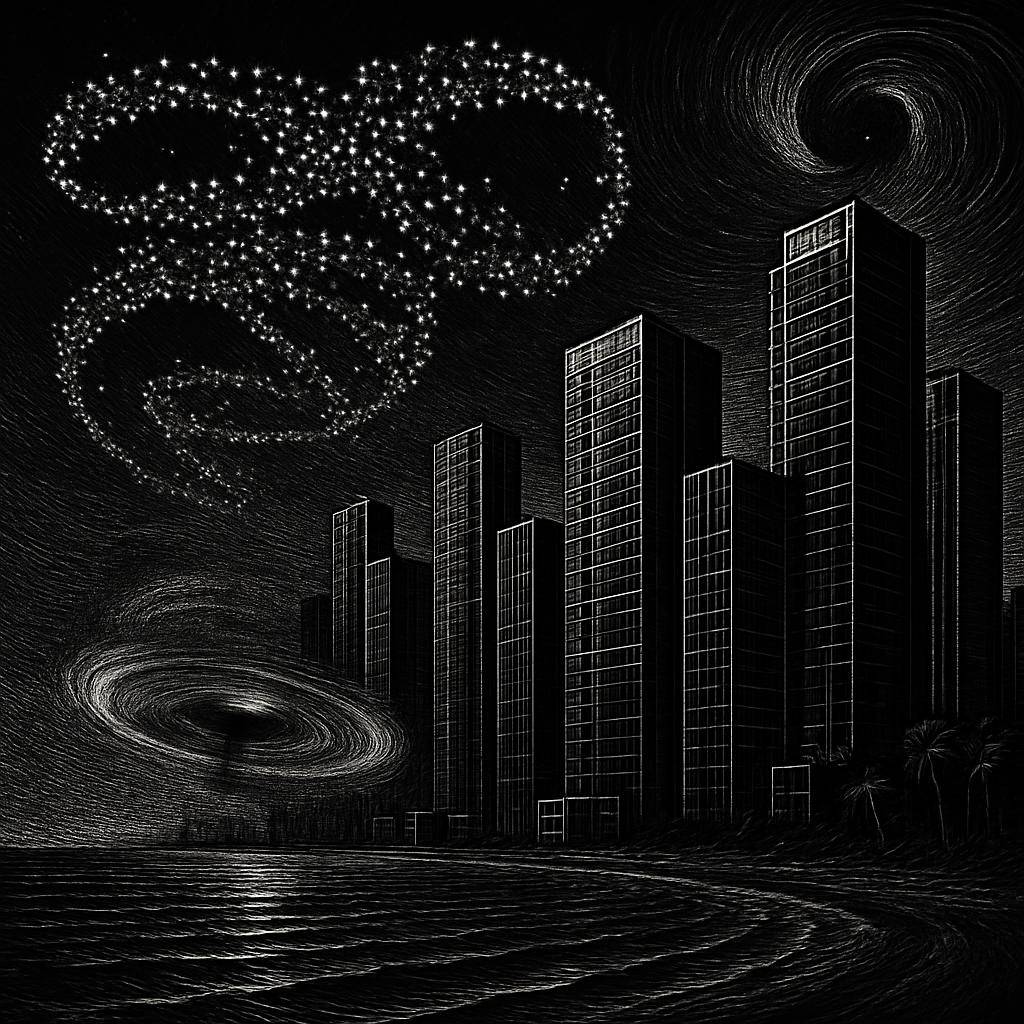
Andrew Mayne: Hello and welcome to the Weird Things Podcast. I'm Andrew Mayne, joined by Brian Brushwood. Hello, hello. And that's it. Brian, that's it. It's two persons, two handers we like to say in the TV industry. Just like it's always been. Yeah. I mean, you know, no dead weight here. I watched a YouTube video about a ghost city in Malaysia. Ooh. And really big, and you think, cool, ghosts in a city. Like a ghost town. Like, no, ghost towns and ghost cities are two different things. And people are probably familiar with, you know, the China situation where China invested very, very heavily in real estate to the point that everybody there is like deeply upside down in it. And this TCP is doing everything they can to sort of manage the economy and keep it from like falling apart because they have parts that are doing great, but then all parts of it that are literally terrible. And it wasn't just in China they built. They built in Malaysia this called like Forest City. And the concept art looked really, really amazing, really beautiful. And they actually went and built it. But like the Chinese tourists and people to go move in never showed up. And so you can like rent like super, super, super cheap there. You know, so what I'm saying is you'll see these videos from like these shills going like, oh, rent so cheap in China. It's so much cheaper in America. It's like, yeah, it's because like their housing market just literally fell apart. You know, like 2008, you know, in America, you could get some houses, really great deals. And it's not so much the sign of an efficient city, you know, efficient economy as much as this. So Forest City, it's a ghost town. I watched a pretty cool YouTube video about it. You can see some stuff there of like just like shopping malls. Beautiful. Like it looks like a thing out of the future. Like this is going to have some businesses, you know, movie set location, but that ain't going to cover the billion plus dollars a year they take to maintain it.
Speaker 02: So, so, so is it a case where they're going to abandon it? Or I guess you, you watched the video. I assume that you got, you got something for us here.
Andrew Mayne: Yeah, there's just, their, their, their occupancy is like at 1% or 2% and slowly they're going to, you know, the, can they get occupancy to maintain it before the company that owns it, which is a conglomerate in China that owns it, runs out of money to support it. You know, and, and, and sometimes what happens is those projects when they kind of don't, you have to maintain them. They're being maintained right now. People go like, yeah, you see guys and workers like keeping things clear, but there's nobody there. There's like one restaurant open. Somebody goes, I went in there and there's a bunch of people. It turned out they're all staff and they all swarmed around and tried to sell them a $200 a bottle of vodka. Uh, so, Brian? Yes? I have made you mayor of Forest City.
Speaker 02: Oh, okay. So, what's funny is as you were describing this situation, uh, I immediately thought of, oh, good, you can invent Twitter. You can create YouTube. You can basically do all of the web 2.0 stuff because, for all you young'uns, gather round as us crusty old Gen Xers bestow upon you ancient wisdom. Uh, that's exactly what happened in both the infrastructure run-up in the dot-com bubble of the late 90s, also the run-up to Y2K. The spend was enormous, ridiculous, and, yes, the quote-unquote bubble popped and Internet was quote-unquote over, but guess what? With that infrastructure, suddenly you could come in very cheaply and do some ridiculous stuff and nobody could tell you no. So, in this case, the first thing I'm going to do, you know what, Mr. Investor? Uh, uh, look, I'm, I'm, I'm a first-time mayor here, but I know, I know, uh, I know that the fastest way to get energy going is to, is to get in front of a parade, and I wonder whether or not modeling a, on something kind of like Burning Man might be an interesting idea. Get every, get big names, outrageous spectacle folks, and get it on the map as a artistic hub, because for every creator, so let's say, for example, somebody wants to make a movie. Get, get some famous independent creators, YouTubers, cinematographers, and, uh, and, and say, what would you do? Okay, but here's the problem. Most of the stuff I'm pitching is less relevant once AI is here, but, but I don't have to worry about that. The artists will figure that out. That's my big thing, is get, get people who want to take wild swings. Figure out what can't be done anywhere else, and make sure you have a bed. Either that, or, a social experiment, turn each high-rise into a nation-state, and let them have their own, make them sub-mayors of burbclaves.
Andrew Mayne: Remember, you're mayor, though, you're not the ruler of Malaysia, so that's the problem. Yeah, yeah, okay.
Speaker 02: Well, well, within, within a, hmm, either that, or charge a lot of money for people to play high-rise tycoon. Tycoon, although, as it's also known, being an actual high-rise tycoon.
Andrew Mayne: Yeah, it's a, it's a tricky situation. They thought that it would be this big vacation, you know, look at, you know, people from China would, you know, come to go vacate, you know.
Speaker 02: What, what was it that, that caused it to flop? Just, just, uh, is it the inconvenient location, or they just overestimated?
Andrew Mayne: The Chinese, the Chinese economy is way worse than people realize, and the money they have for, like, the number of Chinese people that have disposable incomes to kind of go do vacations is not there. Like, they were pressured by the government to invest heavily in real estate, and a lot of people are just really, really upside down in it, and paying for real estate that, that, uh, they couldn't fulfill or make do on. Like, these were all, like, probably pre-sold, but they tried to pre-sell these to Chinese citizens, and there was just no appetite for it. Because that was one of the things, is they were selling, the boom was based upon selling, advanced selling all these properties. You see these ghost cities in China, what they were, is they were, it was like Florida would happen. You know, the 2008 housing crisis was, the lot of it was second homes, was speculation. We have our home here.
Speaker 02: By the way, that was when we pretty much lived in the Orlando area, the two years, 2007, 2008, I headlined at Universal Halloween Horror Nights. We just got an Airbnb, and we just, I believe we were the only occupied house in the development. It was unreal. An entire development of these fine, I don't know, $350,000 houses, all of them empty. It was unreal.
Andrew Mayne: Yeah, that's the, yeah, that was the problem with a lot of, like, you know, vacation stuff, whatever. You know, I told somebody, like, yeah, you know, we had a timeshare, we have a timeshare in Florida, and they started hysterically giggling, like, ah, my parents have one, and they're trying to unload them. I'm like, no, like, ours is a Disney World. Ours is actually cool and in demand. None of this off-property BS. Literally walk into the Magic Kingdom. But, yeah, like, it is amazing, you know, living in the Bay Area and looking at housing prices in Florida, and it's like, oh. Is it, they went crazy since then? They're low. I mean, it's just like, I mean, LA, I mean, here in Bay Area, our housing prices are, like, insane. You know, what, you know, what you're, you know, we're compared to, like, you look at a $200,000, you know, a $300,000 house in here, and, like, looking in a place, like, in Florida would be, like, a two or three million. It's, like, just completely different. Yeah. But, okay, you know, it's, and that's a big challenge, is you have these ghost cities and places like this, you have declining populations, you know, you have this, some people, like, I've heard some people, like, oh, Japan's a great model. I'm like, Japan's a terrible model. Like, there's less and less people look after the elderly people every year. Like, like, what point do you want, you know, you know, I'd say grandma, but grandma don't got no kids. You know, what do you want older people to, like, have nobody they can call? Um, so, it's a tricky situation, and, you know.
Speaker 02: Yeah, I don't, I, but I, we don't, we don't see the developer pulling out, do we?
Andrew Mayne: I mean, surely, though, whether there's laws about that, like, literally, the developer, uh, if you look at, like, the developer has properties around the world, but they have to keep subsidizing this. Hmm. Um, so, if you look up, it's a hundred billion dollar project. That's a lot.
Speaker 02: That's, like, you could build, you could build, like, ten of the sphere. We were, we were talking about, uh, the, the sphere project, which, uh, uh, with, the numbers weren't as bad as we thought, uh, but Justin and I were talking about it. It was originally proposed at 1.3 billion and then cost another billion dollars, so it was, like, two billion dollars.
Andrew Mayne: Yeah, uh, they had, uh, and, and Malaysia's got some really screwed up rules, like, they don't let, like, citizens of Israel go there and whatnot, like, just. Wow. Terrible, terrible situation.
Speaker 02: Yeah. So, that's interesting. The fact that Malaysia and China, so, it was for the Chinese economy that they were building it out, and they were hoping to.
Andrew Mayne: Yeah, Chinese investors built it in Malaysia as a vacation place for Chinese. Yeah, that's crazy. Yeah, I mean, you got a country that's got a large Muslim population, so you're going to be curtailed on some of the fun stuff you can do there, too. So, um, you know, you can continue, you know, one of the other, you know, major forms of, uh, economic, um, uh, value for Malaysia is these call centers and pig book training schemes. When you get those calls from numbers telling you, you know, then, it's like, so you just, just turn it into a massive fraud call center.
Speaker 02: Yeah, but unfortunately, slash fortunately, the robots are taking that job.
Andrew Mayne: Um, probably the first ones, but the, the, you know, we'll see, because, like, remember, their cost on that is pretty, pretty low. Yeah. Because they basically kidnap people, English speakers from China and other places and take them to Malaysia and put them in the robes.
Speaker 02: No, that's, uh, but, but that's the, the part that I'm so interested in is right now we're catching up to the sheer volume of, of scam calls and what have you. But, uh, I'm already wearing my, my weird things, futurist hat, wondering, like, what happens when they become better than humans at being patient and being interested and knowing the right time to nudge people? Like, that's, um, one of my, my, my scary scenarios is quite literally, if I had a budget and I was a forward thinking criminal, then I would be spending all the bootleg compute I could on just making friends with males age 60 to 65. So that five years from now, you know, as voices comes in, great, now you got a voice model talking to them. As video models come in, great, you have video chats all the time. And then years from now, so that it's blurry to remember where the friendship started, then, you know, you could introduce your, oh, my daughter's here. And then, yeah, you make, whatever, it goes into a romance scheme. But the important part is you introduce enough characters, and then when you feel like harvesting the money, you invent a tragedy. And it's like, hey, man, I really need 40,000. Are you good for it? Yeah, of course. Like, like, if you called asking for a crap ton of money, I, I, I don't know that I would bother to question whether or not you are a human being. But, but, but that is, um, that is going to be a weird step.
Andrew Mayne: Yeah, I think, you know, the question is if, you know, I think there's so much opportunity right now in the short term, like you can do that in a week, you know, like a day, like a lot of it, too, is just mining and telling people, you know, oh, yeah, it's ain't Brian, it's Andrew and a new number. And things that we shouldn't think would work, and you know better than I do, things we would think shouldn't work, work all the time. And, uh, we had a neighbor who got that number, you know, got a call, you know, a friend of a friend, a friend of our neighbors. The guy got the call from the number like, oh, so-and-so, wrong number. Oh, who are you? And then like, oh, yeah, I'm, you know, I'm Tina. I live in Miami. I invest in South Beach. I'm a hot Asian lady and sends him a photo. And he's like, oh, like, okay. And then starts carrying on the conversation with her and like, well, I can get you in on the deal, but you can't tell. Oh, okay. Next thing you know, the guy spent like $30,000, tells his wife he's going to leave her and he's going to go move off to live with this woman. His friends were telling him all along, it's a scam. Yeah. It's a scam. Like it was, it was like from the get-go. They're like, dude, you know, this is a scam. He's like, no, no, no, no, no. And then finally realizes, oh, it's a scam. And you're like.
Speaker 02: Yeah, that's a, so I did a talk at PDXYZ, an HR conference. And my talk was all about how we haven't yet made the pivot to think of HR as critical security. But the exercise that I had everyone do is write down, think about people you work with every day, and then figure out in weeks, months, years, when's the last time you saw them in person? And now that didn't matter during the pandemic and all of the before times, but it matters now because, for example, there's, I got a follow-up message from somebody who I hadn't spoken to in a few years, a name I knew, around 4th of July. And it turns out it was just an old friend, you know, rekindling our relationship, but there was a weird moment when it had aged out a good 5, 7 years. I saw that the last text exchange was from the before times, and I'm like, I don't know what happened to this individual's phone in the intervening years. I don't know what got compromised where. So I had to do a little bit of weird talking around things before it became clear, you know, he referenced enough early things that it was definitely him. But anyway, I told the HR people that they need to think of that in-person meeting as that invisible password, that thing that both of you, that shared memory that is unambiguous, that nobody could know.
Andrew Mayne: Well, it's just hard, though, because I get it from your friend, and then I tell you, and I'm leaving, you're so vulnerable because they're sloppy, and they're sloppy, and you need, all you need is one person to be sloppy in a chain of eight people.
Speaker 02: Oh, and that's the case if it's, you know, a password, and that's the reason that I tell people don't do passwords. Instead, think of shared memories, because a shared memory, you can approach from many different directions.
Andrew Mayne: No, but I know what I'm saying, like, sorry, but I'm saying, what I'm saying, like, if I've compromised Justin, and he doesn't know, and I'm in a conversation like, yeah, Brian asked me to share my memory. It was this. What was the one you did with Brian? Like, oh, yeah, that's it. Oh, cool.
Speaker 02: Oh, oh, well, and that's just it. It wouldn't be a single memory. It would be a number of them. Like, as a security expense, that's the – so we've been wondering, like, why are we spending money on all these, you know, events, these holiday parties or whatever? Like, during a holiday party, you make a whole bunch of memories, and in fact, that was the point I made on the HR thing was I did an improv exercise where Tom Nash, the guy I was doing it with, I challenged him to play PowerPoint roulette. He didn't know what the slides were going to be, and we picked a topic from the audience, and then during it, he had to explain – I forget what the topic was. It was a serious topic, but then he has to work in the fact that a woman is feeding a cherry tomato to a bunch of celery, and it was a funny moment. But all of those vivid memories, there's a whole bunch of them so that now when we hop on a Zoom call, it's a shortcut. We'll both be able to reference that. And, of course, you're right. Once those get burned, then what? And the answer is you have another event so that you're able to skip to knowing it's really the person.
Andrew Mayne: Yeah, I mean, I want to – I'll do the – I'll take the counter on this, and just we'll figure it out, okay? Because, like, I look at, like, I'm in a situation where I get in these – when I'm asking other people for their time, like, I run a couple signal groups, and I'm told, let this person in. Mm-hmm. And sometimes this person's high status, and if I do – I have to have the most minimal way I can sort of say, really, all I can do is just sort of – I need to get you on the record saying that you're saying you're the person that's doing this. Right. Because otherwise, I create so much friction, people don't want to do it. And that's the hard part, is you create this situation of, like – we see this in security all the time because some people are super, super into it, but also if we follow everything they do, we could never deploy or do anything. And then other situations where people just quit on everything.
Speaker 02: And so what you're describing – that is exactly the problem. What you're describing is 100% the problem because when you start with virtual presences from both parties, it is extremely difficult to verify everything, and you have to go to weird third parties, and the friction does get too high. Whereas being at an in-person event, like at DEF CON, just as soon as somebody was interesting, right there with them, I would turn, and with the phone in view, I would say, what's your phone number? And I would type, and then I would take a selfie of us, and I was like, hey, it's great. Like, there's no doubt. And then later when I text them, it'll be in that same thread with all blue text, starting with our shared memory. And to your question, I don't know what the answer is without an in-person event. I know that in-person events smooth that all over.
Andrew Mayne: Yeah, but yeah, just in my world, it's not realistic because so many people I'm doing business with or engaged with, we can't be in the same room. But it's a thing to think about. Like, a lot of it I have to go for, like, does this person vouch for this person, et cetera. It's why it's a growing area. It's going to be the, you know, the new trillion-dollar economy is just literally, it's going to be a lot of different strategies to figure out how to do this. Yeah. You know, so, who knows? I saw something really cool. Invisible drones. Invisible drones? Explain this one to me. All right. So, go type in, go to, yeah, type in in YouTube, go look for, like, invisible drone.
Speaker 00: All right. And you'll see a, let me see, invisible drone. Yep. There we go.
Speaker 02: Okay. What's the invisible part to it? Have you found it? No, but that was me filling in.
Andrew Mayne: Invisible drone. There we go. Yeah, that one. Look at it. Oh. Whoa. So, what it does is it spins so fast. It's got these rotors on the other sides. It spins so fast, it basically blurs itself.
Speaker 02: That's clever.
Andrew Mayne: You know, and so, it's a tiny drone. Things about fits in your palm. You know, you make some wires and stuff. And it's, the idea is that imagine the part that has the rotor, those two rotor things are also spinning so fast, too, that you're just not going to see. I mean, they're showing it in broad daylight in the middle of a lit room. Oh, yeah. And even then, it still looks hard to see.
Speaker 02: Well, and especially at night, I still don't know. I remember it was just over 10 years ago, the first time we were walking back when Trudy's was still open. We were walking on that same road, and then we just saw the red and green lights of a drone zip overhead and never knew what it was. And I'm seeing less of that now, or maybe they're just quiet. Like, are they, did drone delivery work out? Are there a lot of places you can get drones to deliver stuff?
Andrew Mayne: I think they're just starting that out. What happened, too, was that the, they started cracking down on a lot of drones because they had enough collisions and stuff with airplanes that they started showing up at people's houses more often. Yeah. But you think about this, it is, you think about when these things get more capable and steerable and a swarm. It's like a force field.
Speaker 02: Well, that is something that I'll peek in on time to time, just the unbelievably coordinated hive activity of a gigantic drone show. Have you, have you watched a drone show live?
Speaker 00: Mm, yeah.
Andrew Mayne: Trying to realize, I've seen, yeah, I saw some, like, 4th of July.
Speaker 02: I have not seen one live, but I, like, the visuals are just extraordinary. The, like, giant particle physics where they virtualize fireworks displays. It's, it's bonkers.
Andrew Mayne: Yeah, they're doing, and they're doing now is, where was I? Somewhere, where, Rock and Star, we saw just the tail end of one. But they're doing a thing, too, like, they do this for LA and stuff, like, big movie releases. Like, when the, um, the season two of Monarch came out, they did, like, a giant Godzilla in the sky doing this. They'll do it with Darth Vader. They'll do that. And, you know, the main thing is, the cost of this is going to fall down to such a point that I could see cities and stuff doing nightly, you know, drone displays or things like this. Because, you know, like, we're looking at a giant purple tiger over a city, and it's like, why not just do that at night? Why not just have some kind of cool thing? We live in, you know, in Bay Area here. Like, why not have something super cool over the bay?
Speaker 02: It's bonkers. It is a bonkers display. And, uh, it's funny because this was, there is a magician who hired me for a couple days of ideation for consulting. And this is a big magician who had big, uh, budgets, uh, who we both know. Um, and, uh, I pitched essentially this, this kind of hive drone display thing before, at the time, I mean, certainly a lot of people had to have had the same idea. But I think, uh, it was essentially this idea, and to see it happen and be such a thing is freaking rad. Yeah.
Andrew Mayne: Yeah, I think that's the thing, is the cost of these continues to fall. I've seen some cool daylight ones, too, that use, like, LED curtains and stuff. I do think we're just going to, it's going to become much like the, you know, the big inflatable figures that people put out in front of car dealerships and stuff. It'll be cliche, yeah. But kind of cool. It's an opportunity, the neat thing is that you can just do something different. And I do think it brings us closer to, you know, you think about every science fiction movie has, uh, some floating hologram stuff. And it turned out, well, you know, we've got to use our pixels or, you know, the size of a dinner plate, and it's a much bigger show. But it will look like that. And I do think that you'll start to make these things more robust and whatever and cheaper and disposable that, kind of cool.
Speaker 02: It's, it's astonishing, man. Uh, dear listener, take a look at this. Go, go type in just drone show and see what you can see.
Andrew Mayne: Yeah, if we, if we went back in time when we first started doing this show, and I think we take it, we take these things for granted, the scale and the scope of these drone shows now, like we would be like, yeah, that feels like the view. But if you just showed this thing that was going on in the sky and we asked like, how is it being done? I don't know. I, I, I think I'd be like, I don't know, maybe lasers hitting vapor or something. Yeah.
Speaker 02: You'd be like, no, drones. Yeah, right? It's crazy. Uh, specifically, we're looking at the Guinness Book of World Records, uh, drone, world's largest drone show.
Andrew Mayne: Man, it is legendary. Oh, yeah. And there's going to be, you know, some, go to Home Depot and buy the Halloween drone kit that you put in your front yard.
Speaker 02: And, wow, this looks like a scene straight out of Blade Runner. It is because, keep in mind, there are so many bright lights and it's such a wide space. It's literally lighting up the city. The entire city is washed in the glow of this unbelievably gigantic display. When did, when did this one happen? This is bigger than I ever thought. Yeah, four months ago. Wow.
Andrew Mayne: That is, that is why I'm not worried about China taking over. They're just wasting all their money on drone shows.
Speaker 02: Yeah, sure. That's, they got no other ideas to do with that.
Andrew Mayne: Yeah.
Speaker 00: None at all. Yeah. Amazing. Bonkers. So.
Speaker 02: How long, so right now we're still at the part where you would play with a single drone, but pretty soon I'd imagine that you could buy a box of a drone cloud. This is going to be just like with fireworks. You'd have your local guy putting on a show. You could vibe code a whole presentation for this. That's going to be within the next couple of years. Your, your local guy is going to impress the neighborhood with, with his own drone show. Christmas, uh, decorations, going to get all droned out.
Andrew Mayne: We can, uh, remember the things are still noisy, so there's going to be limited. So we can buy a drone show.
Speaker 02: How much, how much, I'll lock in my guess. Uh, man. Just, that's a lot of pixels. How much, how much, it's got to be what? 20 bucks a pixel.
Speaker 00: That's what I'm going to guess. That it's $20 a pixel. Um, like there's one where you can, trying to like, on one hand I said like, commercial
Andrew Mayne: drone light show starting at 40K investment, um, versus a 10 drone starter kit starts at about 13K. 10 drone? Drone blocks. I mean, that's a small number. Like, yeah, you can actually buy drone blocks, like a light show kit.
Speaker 00: But, that's crazy.
Andrew Mayne: Robo show plotter, um, yeah, just buy your kit to see how many you want to add.
Speaker 00: Bonkers, bonkers, bonkers. Totally rad. So what else has gotten weird?
Andrew Mayne: Yeah, um, but I think we've talked about this before, that when you're looking at an AI economy and you look at where things are going, you know, the direction's going there, you have to see that it's hard for us to imagine how much bigger other things become. Um, outdoor entertainment, visual entertainment that you would be spending. If I said, hey, you know, if you're, you know, somebody mentioned they're doing this, I think it, uh, what'd they say, Busch Gardens or whatever, they're doing the drone show there nightly. You know, if I said, you know, 20 years ago, hey, I want to spend some money on an outdoor show at night. You'd be like, well, you mean fireworks. Or lasers. We can do fireworks or lasers. Yeah. You know, that was it. And now you're like, oh, we can do drone show. We can do this. We can do that. And we're going to be inventing more stuff.
Speaker 02: It's so bonkers.
UNKNOWN: Yeah.
Andrew Mayne: Um, I want to pull up, you know, I follow these kind of cool YouTube sites that have like some really cool science stuff. I was trying to find some interesting stuff.
Speaker 00: Um, and I was trying to find, was going through my YouTube history to find one of these things.
Andrew Mayne: But, um, one of the things was this cool video that was talking about, like, there's a, uh, paper that came out a couple of years ago that made the suggestion that, um, uh, black holes and when you're trying to reconcile like quantum mechanics and relativity, there's a, there's, you get a disconnect because, you know, when you try to figure out how gravity works, et cetera, and then also if you look at like how a black hole, you know, where does information go? Because like quantum mechanics, like the information doesn't get stored. You can't destroy information, quantum mechanics. And relativity, you have a thing called a black hole, which in theory, nope, the information's gone. And that's where the idea of Hawking radiation came from. Partially it was from that. And then somebody, the idea that what if like black holes are basically quantum tunneling to other objects in a strange way that like, that's where the information goes, but like to another universe. Right. Because there was this, oh, what this was, there was a, a, if you follow the whole, uh, what we've been doing with the whole, our ability now to listen to gravity waves, right? The whole experiment, the LIGO and all that, where we're basically, what we do is we have these detectors. We have a couple of them around the world. And when you get two black holes that start to swirl around each other and then merge, it creates a big ripple in gravity. And these detectors try to listen for that to try to detect like, cause they just, you know, you know, tiny, tiny, tiny, tiny imperceptible sort of change in the gravity wave hits it. And if they figure it where it hits two detectors, they have an idea kind of generally where it is or whatever. And so there was an event where they, cause they can see this sort of waveform of like, cause they, you think of like a penny going around a train and they look for this pattern and they can tell that's two black holes somewhere in our universe that are starting to orbit each other or, you know, billion years ago, whatever, orbit each other. And now I've collapsed and created this gravity wave.
Speaker 02: There was a case where- How much time, so this is an actual detector that we have? You said LIGO?
Andrew Mayne: Yeah, LIGO. Yeah. They have a couple of detectors around the world that use these big, long, like laser beams that wait for it to see, detect like the inference to see if something, you know, they get two points at the same point, they get the same interference. That's cool. And it looks for the pattern. It happens within like seconds. Like that's the crazy part is you get this thing and you pick up, you see this location get it, A get it, location B around the world detect it, like we both detect at the same time.
Speaker 02: Got it. Okay. So the penny going around the circle thing, I assume like you don't really hear this, you hear the sound of the penny going at first, but then there's a moment where it hits the threshold right at the end where it's unmistakably making like a reek noise and then it just stops.
Andrew Mayne: Well, it's two of them colliding. It's the two, when the two points, they collide. Right. Is, is where you get this, you know, this gravity event, which you can detect, you know, millions of light years away. Right.
Speaker 02: Right. So, so we're, we're listening and we hear essentially the, the penny equivalent of two black holes hitting the reek and then stop.
Andrew Mayne: Yeah. We start to hear, we can, we know the pattern of like, oh, this is when they're getting closer. And you let. Yeah. So there is a, there was an instance where they had a gravity wave and we've been finding tons of these, tons of these, cause you know, the universe is big, you know, two black holes are colliding every day. Um, and there was an event where, uh, they had part of the pattern or like part of the pattern and then missing the other part. Like it was the other part of it was missing and it was like one chunk of it was gone. And somebody wrote the paper, the researchers wrote a paper, which they're like, Hey, we have an idea. You may not like the idea, but it fits if certain things are true. What if that was coming through a wormhole from another universe?
Speaker 02: Oh, what if, what if we found the outdoor?
Andrew Mayne: Wow. Wow. Yeah. And the idea too, cause there is this idea, cause in, and the idea that black holes could be quantumly entangled events, that a black hole could be quantumly entangled to some other thing, a wormhole or something, the other side of the universe and our, another universe, even the idea that this thing happened and that's what it was. It was just more like, Hey, just, we're not saying it's this, but if this is true and this is true, then it could be this, which I thought was such a cool idea. Like, did we just hear a wormhole for the first time?
Speaker 02: That's crazy. I love those moments where, where the math checks out and whether, and not all of them ends up being right, but like the moment that, that the math worked out for many worlds being true was, uh, uh, I mean, not that we have any way to directly test, but, but it certainly seems like every possible thing that is ever happening is in a, in a universe next door.
Andrew Mayne: Yeah, it's, it's, and we start off with crazy ideas, you know, black holes. The idea of a black hole was this crazy notion of what if matter becomes so dense that it creates this event where nothing can escape from it, light or whatever. And it's just like there. And then all of a sudden we found like, yeah, that turns out that happens. And we find out the really common, we find out there's a big one sit in the middle of our galaxy. And then we find out that there's other ones that are so much bigger. The thing too is the density that you need to make a black hole, it's sort of like inverse to like, what are the size of it is. So if you want to have a black hole, the size of our solar system, it doesn't have to be, doesn't actually have to be as super dense as you might think it would be. It could literally be, it'd feel like a cloud, but it's dense enough to basically bend everything inside of it. Is there's, you look at like, there's a Sagittarius, there's ton 168, I think it's one ton 168, which are bigger, like several times the size of our solar system. And like, there's a super, super massive black hole. So just sort of defy our idea.
Speaker 02: Wait, a black hole, the size of our whole solar system. Oh, way bigger. Yeah. And by the way, that's something that I always had a hard time wrapping my mind around was if, if it kind of has infinite gravity, then how could it be a smaller version or a larger version? But I guess really when you think of it as kind of a cliff's edge of an extremely, and specifically what I'm thinking of is the first time I read about the idea of micro black holes that evaporate, which sounds crazy, but, but I guess.
Andrew Mayne: Well, yeah, all black holes eventually, that's what Hawking radiation is, the idea that eventually gives up everything, it radiates away, but over an impossible amount of time, hundreds of trillions of years, you know, that like literally the black hole radiates off all of that.
Speaker 02: Got it. So it's equivalent to, if you picture an eddy, well, I don't know, I guess basically things are spinning and you get what, the x-ray radiation shooting out the top and bottom sides?
Andrew Mayne: Well, yeah, you get, you get like, there's an outer area where there's certain things like the Hawking radiation and that it radiates away. Um, so ton 618, um, this one is how 18 billion light years from earth. It is 40 billion times the mass of the sun. Wow.
Speaker 00: And it's, there's also Phoenix A, which is even bigger.
Andrew Mayne: Like, um, if you look at, they have a graphic and they'll show you, uh, Phoenix A ton 618 and then orbit of Neptune. And Phoenix A is like so much, much bigger. Like it's several astronomical units across. Like it's insane.
Speaker 02: That's crazy. Uh, speaking of crazy things in space, did you happen to see the sharpest image ever taken of the sun?
Andrew Mayne: Yeah, man. That's, uh, that looks, looks like a pretty turbulent thing.
Speaker 02: Yeah. So this is, uh, oh, there was one that put it in perspective, but basically, uh, this center chunk right here is a hundred kilometers apart and at a hundred kilometers, you can squint and you, you can wrap your mind around like I have seen a hurricane that size or, you know, an image actually, yes, a hurricane of that size. Um, there's little eddies in there and it's thought that in the turbulence is the reason that the surface of the sun is so much hotter than the inside. Like basically, I assume that it boils down to with all those folds and the turbulence, it's the equivalent of massive surface area. Basically.
Speaker 00: There was a, uh, illustration in a book.
Andrew Mayne: Like I think I may have had it as a kid. It was about the future and it was talking about colonizing the solar system. And my favorite one from there, like I'm a kid. I don't think I stopped to process it. With somebody who's like, you know, what if we, what if sunspots were cool enough that you could just build a colony on it? And, and I was like, you know, nine years old, whatever. I'm like, all right, that sounds cool. And then like adult me is like, um, you know, uh, just because this spot, even assuming that, even assuming that a sunspot was, you know, mere, you know, tens of thousands of degrees or even it was, it's something happened. Like you're still, I don't know, a thousand miles away from the effing sun, you know, like you're not, it's a terrible place. It was just a cool, like illustration of this colony on the sun. Like the idea that there's the rest of the sun here and there's a spot where they just built a colony on a, on a, on a, you know, one, you know.
Speaker 02: Yeah, a bit of, a bit of a, you'd be heavy there. Uh, that, that was one of the things we, we talked about, uh, must've been 10, 12 years ago was there was some article proposing like, yes, of course we're going to terraform Mars first, but hear me out. What if we built floating cities on the high pressure, uh, atmosphere of Venus where we could have one G and you just, you know, uh, because, uh, gravity for, uh, for the human body, fairly important for the bones and, and staying alive and whatnot. But anyway, uh, I, I love the idea that big gravity tells you what's that. So big gravity tells you big, big gravity, but I love the idea of like the most inhospitable planet that we could think of maybe would be an okay choice to, to move to.
Andrew Mayne: Um, I mean, uh, you're, it's, Venus sucks for a lot of reasons.
Speaker 02: Um, the, the specific proposal was, uh, if you.
Andrew Mayne: Oh, I read it. Yeah. Okay. Yeah. I just, it was like, you know, we just figure out how to float in the clouds as you do. And I'm like, okay, what are we, why are we going there? Like we want to get on the surface in Mars. We want to get in the surface and dig and build. And it's like, no, it's going to be this in the clouds. I was like, why are we going there then? What are you doing? Yeah. You know, like we'll, we'll build probes to go down on the surface. Okay. Then just build habitats on the surface. I was like, like, you know, if we're, you know, I, I'm all for exploration. Yes. I a hundred percent. Like, I think if we're like, if, you know, 20 years on NASA is like, we're going to build a floating observatory that sits on top of the clouds of Venus. I'm like, yeah, let's do that. It's awesome.
Speaker 02: So yeah, well, and now, now we're at the part in history where it used to be the answer was, oh, well, you can't trust a probe or remote or blah, blah, blah. You need a human there to do all of the tough decision, load bearing decisions and so on. And then nowadays it's like, yeah, or four ounces on the a hundred pounds, you could just send machines that are going to do a fine job.
Andrew Mayne: Yeah. I think they'll get there. I think we'll get there where the machines are pretty good, but there, there is a thing too of like, why do we go there? You know, why do we do it? And I'm, I'm looking at how many people watched Artemis too. Yeah. You know, nothing happened on there that a space probe hadn't done before, but I'm like, ah, a big part of this all is like, let's see if we can go live in space. Yeah.
Speaker 02: I'm real glad that went as well as it did. Boy, am I glad. Boy, I, boy, did I not care for how nervous I was.
Speaker 00: Yeah.
Andrew Mayne: Yeah. I can name a handful of people who are really super glad it went really well. Um, uh, that was cool. It was exciting to see, you know, we had this, that we, we get into this sort of pessimism from time to time of like, ah, people don't care anymore. I'm like, yeah, we got tired of like, you know, the, the, the, the six or seven, the third or fourth moon mission, because literally we're at the moon. Like, yeah, cool. What's going on? You know, we're going to play golf, you know, like, okay. And you get that, like, wow, people don't care. I'm like, if it's a new thing, we'll get excited about it. But when it's, and I get like the really important science, I get it. I'm a fan for that. But a lot of it was just this idea of like, we can't be as excited about the second trip to the moon as we were about the first trip.
Speaker 02: Well, and remember that the whole reason we went to the moon was kind of a hybrid thing. It's convenient that we got a little bit of science done along the way, but in an extraordinary, extraordinary maneuver, instead of having a human killing war, we decided to have a cool storytelling war with, with the USSR. And so, and in that regard, like ratings, it really was the ratings war and the ratings, you know, there's, you can't keep mining that same dopamine with the same story.
Andrew Mayne: Yeah, it's gotta be continue to do that. And it's hard because, you know, it's hard when you're trying to do things in the world of science too. And, you know, um, I remember having a conversation with somebody once who was, uh, uh, some people who are like, what if we made scientists famous, like rock stars? I'm like, why do you hate science that much? You know, like, like you, you, you let a person alone, give them resources, let them spend several years to come up with something cool. But then you're going to create a situation where we're not going to think they're cool unless we understand it. So then we're going to force them to have to do stuff that we think is cool. And then, you know, we kind of did that with Ted and. Yeah. Well, and then what happened is.
Speaker 00: Yeah.
Speaker 02: Yeah. Yeah. Well, you create incentives where the skillset turns out the skillset to be a science, the scientist, uh, not necessarily the skill set to be a rock star. And, uh, just wishing for the one to be the other, you know, you, you know, what happens is a lot of rock stars put on, uh, lab coats and announced that they're scientists now.
Andrew Mayne: That's, that's, you know, kind of what happens. I noticed there's a certain kind of personality gets attracted towards it.
Speaker 02: And, you know, um, you know, I want to, I want to give a shout out. So when I was in Portland, we did a little meetup and originally I announced it on the cord killers podcast, but one of the folks that, that showed up, her name is Amber and she described running across the weird things podcast a few years ago. And because this is the way Amber rolls, she went back and listened to all 990 plus episodes of weird things from the beginning. Now she didn't do it in a row. She's got this amazing system where what she does is when a podcast is interesting, she adds it to the mix and she listens to podcasts all day, every day, but like once per day, there would be a weird things episode that she would listen to all the way back from episode one up to we're at 996 is our official count right now. How amazing is that? And it's like, like to be there for all, all of it. I mean, I guess we were there for all of it. And you know what? You too, dear listener, you should be there for all of it all the way back to the beginning.
Andrew Mayne: Fun fact. Not all three of us have been on all episodes. So Amber has participated in more weird things episodes than we have.
Speaker 02: Congratulations, Amber. Amber, you may be the only person on the planet who has completed the weird things challenge. How amazing is that?
UNKNOWN: Yeah.
Andrew Mayne: Like if Brian, if like I'm not on, if Brian's not on an episode and just I record it, Brian's not going to go back. Brian's got.
Speaker 02: In the early days I did. But then, you know, around year four or five, it's like we all got stuff to do.
Andrew Mayne: Then there were other podcasts in the olden times. Yes, yes. We got NSW showing weird things.
Speaker 02: All right. It's like, yeah. It's like, well, what am I going to do on this run? Might as well listen to the one so I can talk about it on the other. Yeah. Yeah. Amazing. Yeah. Nowadays, she mentioned a specific podcast app. In fact, write us, brian.schwe.com, Amber, if you remember what it was. But it's like a 10-year-old app that that setting of just sort of add it to my favorites and then it just kind of like a radio station, put it in the queue. And that makes sense. Like there would be talk radio shows that I'd listen to every single day when I had a day job. That makes sense. Yeah. Want to do picks? Yeah, dude. Oh, you know what? I got a couple of picks. I've been reading really good stuff. Do it. Multiple. No rules, man. I mean, if Amber allows it. Yes. Well, I'll tell you. I'll go into reverse order. The one I'm listening to today is Pitch Anything by Oren. M-O-R-E-N? Let me see. O-R-E-N-C-L-A-F-F. An Innovative Method for Presenting, Persuading, and Winning the Deal. And this is ostensibly about like you're trying to pitch for a venture capital or any of that stuff. But truthfully, it's just a different type of selling. And it's one of those, I can already tell, it's only four and a half hours long. I'm going to go back and reread it again. I'm only an hour and a half into it. But it's one of those core ways of seeing things that's so dead simple, I can't unsee it. And he says, here's the mismatch. We're going to be overly simplistic here. You've got three brains. You got the first one to evolve was your crocodile brain, the lizard brain, your autonomic system. What does it know? It knows I'm under threat. That's the amygdala is in charge. You got your middle brain. That's the one that plugs in.
Andrew Mayne: It's got a problem.
Speaker 02: What's that? Right. This is metaphor, metaphor, metaphor, right? You got your middle brain. That's the one that, you know, cities evolve and you know your status. So the middle brain is all in on what is my hierarchy? Think, think chimps, primates, right? What's my status? Where, how do I plug in here? Am I under threat from within the tribe? And then you've got your prefrontal cortex here, you know, your, your neocortex. And that's where your high minded ideas is. Here's the mismatch. When you have a pitch, whether it's for a Halloween party, whether it's for the prom, whether it's for a local ordinance, whatever, there's some point you meet other people. You are pitching from your neocortex and you forget that they are only listening from their crocodile brain. They're thinking about, does this threaten me? Does it, do I want to, do I want to fight it or mate with it? Like, is it dead simple? And when you, yes, use your neocortex for whatever your great idea is, but pitching is its own dance and you have to remember that you need them to feel safe and instantly able to get the little bits and make it so that each, each piece of what you're saying, they, they will want to say yes to and participate in. And of course, if you've ever pitched anything, whether it's a TV show or a book or what have you, you know, that a lot of times people will use power to set the frame or like, I just, I only have five minutes. Give me the whatever, whatever. And if you take that at face value, then your pitch is going to fall flat. And instead, what he suggests is what they're doing is they are proposing a frame. Tell me everything in five minutes. If you say, yes, you are accepting the frame, then that's one where it's going to be too easy to deflect. And instead, what you could do is take that opportunity to propose a counter frame. How do you do that? For example, you get pulled over by a cop and you decide, oh, I'm going to say, I didn't know I was speeding. And then, and that's the frame you've picked. And then he's like, well, here's radar. It says you're speeding the end and you lost. Whereas, meanwhile, that story that I tell in the social engineering talk about, oh, I'm told this will help and pulling out a get out of jail free card. That is an adjacent story where I hold all the power. Or imagine if I get pulled over and the first words out are like, sorry, I just finished a grad night party. I'm a magician. You want to see a trick? Ha ha. Now, at this point, if he says, yeah, I do want to see the trick, then already it's over with. I'm not going to, I'm not going to pay for this ticket.
Andrew Mayne: I'm going to, I'm going to, well, you stay true, but you always do. But I'm going to make you do a breathalyzer test if you just say, I just finished a grad night party.
Speaker 02: Oh, yeah, yeah. Fair enough. But, but, but that's the other thing is most of us don't think about what frame we're opening and what, what dance and negotiation we're doing. And so it's one of those, like, for the moment, uh, the, the moment he said that I went back and I thought about a bunch of times that I had successful talks, pitches, good showcases in the college market. Even the talk I did at DEF CON, I was like, oh, it checks all of those boxes. And then I thought about all the times that stuff didn't work out. And it, and, and, and it was very clear. Yeah. They set the frame and I, and I didn't, uh, and I engaged when the deck was stacked against me.
Andrew Mayne: It was great. I, yeah, I think about like, uh, I remember once I got pulled over heading into Las Vegas for work, uh, and working on TV show. So, and it was, it was a BS thing. He showed, he had a radar thing that said, you went, you were going this fast. I'm like, I'm on a rental car. I couldn't go that fast. But I didn't argue. He says like, he asked me, he goes like, uh, you had it here for fun or for work or whatever. And, and, and I just got to see some friends and I, and, and I was actually going to go work. And I realized I'd said work. I'm no longer an idiot tourist speeding. I'm, you know, a person just trying to get to a job. Yeah. You know, and it was like that. Cause I'm usually like, I'll have like, I've had like, you know, I'm, you know, coming to Florida, I'd get pulled over. State troopers, they're always give you, they'll give cover cops tickets, but, but I've been pulled over by the police. So where are you coming from? I'm coming from my parents' house. Where are your parents? I'll live here. Let her. Don't get a ticket. You know, I'm like, oh, I'm out with friends. Ticket, you know?
Speaker 02: Well, uh, there was a time that, uh, a friend of mine was, was, uh, you know, uh, raising hell as a college student. But I, regardless of what condition he was actually in at the time when he got pulled over, he said the words, sorry about these guys. I'm the designated driver. And that was enough of a frame for, for the cop to say, well, somebody is being responsible and let him go.
Andrew Mayne: Yeah.
Speaker 02: Yeah.
Andrew Mayne: Uh, I have a pick, uh, a little personal. Um, several years ago, I was going through YouTube and I found some very funny videos by a creator who didn't have like a ton of follows or views, but like just one of them just caught my eye. And it was so very, very funny. And I reached out to him. His name was Alex Olam. I said, Alex, uh, uh, you know, this is great stuff. Uh, you know, told him about myself, you know, I've worked in TV and stuff, whatever. If I could ever be helpful, let me know. Kid followed me up. Like, yeah, you know, any advice? And so, uh, started talking to him. He was still in college at that point. And, you know, said, I can introduce you some people in LA, help you however I can. I don't think any of that was like super helpful. I mean, he was already pretty driven. And I told him, if you ever plan on making a feature film, let me know. And he says, I have an idea after I graduate, want to work with my friends, want to make a film. Year later, he told me, he says, Hey, I have my budget. I have know what I want to do. He was super respectful, very, very thoughtful and laid out everything. I want to pay the actress. They get paid, but my friends will work his crew. They'll work for participation. Oh, I can use this. They have a video projection stage. He was going to FSU that I can use there. Laid out his budget, laid out his plan. And I said, Okay, well, I'll do this. So I, you know, gave him some money to go start the film, gets into the film, gets midway through production. I guess like finishes up, but they need to shoot some more stuff. He says, I need to raise some more money. He raised it for me and a couple other people. And he drove all the way from, you know, this point from LA up to my house up in, you know, the Bay Area. Showed my wife and I the work in progress. I asked Roshni, I said, What do you think? He says, Yeah, I think he's really got to something here. So we said, Alex, we'll help you out. We'll continue this on. But not thinking we're ever going to see the money back. Just the idea that he's a young creator. Extremely respectful. I work with other people that I've given money to to make stuff. And then it gets become almost resentful. Like they come back for more and the production is a disaster. And then it's like, Alex was always respectful about this, whatever. And the movie's called It Ends. You might have seen some of the promo. It's been, it's been, after we backed him, the producers of Backrooms came on to the film. It's getting a theatrical release. It's next week from Neon. They're doing promos around the country. They're doing a thing in New York City where they're going to do a 36-hour marathon where you can try to sit through all the way. We're going to the premiere in LA next week. Alex is an extremely thoughtful filmmaker. Very, very bright. Very considerate. You know, he's like, you know, I made this movie like four years ago. I feel like I've moved on as a filmmaker. He's on set with his next feature, which is a multi-million dollar feature film. Wow. And he kind of just did everything really right. That's amazing. I'm proud of this. Yeah, he got, he, he, because he was brilliant director. The producer of Backrooms came on board. He's, he's in the same group as, uh, Corey Barker who did Obsession and, uh, Kane Parsons who did Backrooms. And so Alex is another one of these sort of great new directors. It's got, it's a very cool existential sort of thing. It's very much, he wanted to do a Gen Z kind of like metaphysical sort of thing. Uh, the trailer, you may have seen on Instagram some other stuff for it. But when it, when it, when they, when they come to the card with the credits card for this and my wife and I, our names are right on the poster. We're right on the, in the trailer. And I've had other people I've helped out that are then like, eh, you know, I don't know why I really, and it's like this kid, a really, really high integrity, really, really high integrity. That's amazing. Yeah. I could not be more proud. It's just, it's just, you know, you, you back a bunch of different people and, you know, I don't regret anything. And some people just keep going and going and going and do really well by it. And, uh, you know, just, just really proud of the kid, you know, he's, he's been very thoughtful, very, very much, you know, you know, really, you know, in his moment right now. Pause it.
Speaker 02: Oh, wait, wait, oh, wait, let me go back. I, I almost paused it, but then I didn't. Oh, wait, no, go back, go back, go back, go back, go back, go back, go back. Brian is very proud of this. Hey, hey, Andrew Mayne. Rush Macho, that's amazing.
Andrew Mayne: Yeah.
Speaker 02: That is amazing.
Andrew Mayne: I have another friend who I gave about as much money to to start his project. And then he came up to like, and it was a disaster. We told him it'd be a disaster, but I liked him when it helped him out. And then, uh, he, uh, uh, when it came time, like, uh, credits, like, well, you know, you didn't, you know, like he, he had to go raise a lot. Alex, they all ended up raising a ton more money. And then, you know, but like, because we were the first money in that's named the first many people in this other guy's like, well, you guys didn't give him treatment as much. It's like, dude, we were your first money. Yeah. We were your first check outside of your family. Some people get it. Some people don't. I don't care. I don't even have my name on a movie. Well, I'm, I'm proud to have it here because Alex is a great kid, but is sometimes, you know, people get into that, like, well, did, did you really do that much for me? Did you really do that?
Speaker 02: And it's like, yeah, you know, that's so wild because, uh, well, I don't know. I don't want to get in the whole, the whole game of like credits was one of those things where when Hollywood happened that I was like, I was really confused. Now I understand a little bit better. It's like, well, if you're in a zero sum ladder based, you know, organism in Hollywood, then, you know, you fight like the devil.
Andrew Mayne: Oh no, but they're standards. They're rules. They're practices. You know, I had another person I helped out who then like, well, I had other people coming to bring more money. I'm like, right. Why? Because I financed you to get to the point that you got there. Right. Like, like, like that, that, that's, you don't say somebody else.
Speaker 02: That's the part that blows my mind. It's like, why would you say no if somebody cares about that? I, I, I, I don't know.
Andrew Mayne: Oh no, I don't. It was, it was a very, I think he was a, that person, that other person was upset that I had put more money into it, but I was also like, he was not, Alex was extremely respectful with everybody's time and what went into it. We understood where it was spent, what was doing. We knew we cared about it. When he raised money to do more, it was literally because the movie had momentum. It's like, you need to do professional banks. And he brought in Hollywood money. Like, like we helped him a bit, but then the vast majority was paid for by like the producers of back rooms and everything else like that. Like what we contributed was super tiny in comparison to that. Let me get it very clear. Well, that's great. When does this come out? Next week. Oh, that's fantastic. Yeah. I can't wait. But, and I tell you, sometimes like, sometimes, you know, as a creative, the best thing you can do as a creative is to find another creative and just say, how can it be helpful?
Speaker 02: Yeah, dude. That is one of the cheat codes. I think a lot about, um, oh, you know what? I, I, I do have the other pick that I was waiting to discover. Uh, two voices that I hear in my head, a whole bunch are Steven Pressfield's and Rick Rubin. Well, guess what? Steven Pressfield was on Rick Rubin's podcast and the two of them go as wild eyed hippie as you could possibly imagine. They both believe in magical things. Uh, Steven Pressfield in his book, The Art of War talks about resistance with a capital R, a malevolent force that keeps you from achieving your artistic purpose by throwing BS in front of you at all times. And, uh, uh, meanwhile, Rick Rubin talks about getting in touch with what he calls capital S source, the, this, uh, hippie attunement for the essence of, of what's good art. Anyway, uh, if you just, uh, uh, you've heard us talk about Steven Pressfield stuff before Rick Rubin, epic, uh, producer, music producer, listen to the two of them talking in on YouTube. Just search, uh, Steven Pressfield and Rick Rubin. Amazing.
Andrew Mayne: Um, other pick. Oh, I don't know too. Like my dad, I helped my dad. My dad wrote his biography.
Speaker 00: Oh, wow.
Andrew Mayne: It's his law enforcement biography. It's available now on Amazon called The Long Beat by Jim Harder. Like, Hey, you have different names. Like, yeah, I'm on, I'm, I'm in witness protection. Jim Harder, James Harder. Look up James Harder, The Long Beat. Great, great stories. My dad had an incredible law enforcement journey from working as a, uh, a James Harder, sorry, working as a moon, going after, he worked at Atlanta Police Department, going after, it's okay, I'll refuse, something's not happening. I'll face that review. Going over for moonshiners. You're going to get the, I hate cops in there. Uh, going after moonshiners, all sorts of stuff, you know, just incredible sort of journey through law enforcement. So, I was very, very happy to help him put this together. That's great. That's great.
Speaker 02: A law enforcement's journey from moonshine back roads to cocaine wars.
Andrew Mayne: Yeah, he, he, my dad, like, started off, you know, Atlanta Police Department and then basically, you know, arrested the guy that narked on Manuel Noriega. Whoa. Just literally.
UNKNOWN: Yeah.
Speaker 00: Literally. Yeah, I mean, literally quite the career. That's amazing. That's amazing.
Andrew Mayne: I paused on my, my, my delivery on that, like, you know, literally when I did a pause because I looked and pulled up the page, I got distracted. Um, by the way too, uh, Spider-Man.
Speaker 02: Uh, yeah, I thought it was, uh, pretty good. It's, uh, like my fourth favorite Spider-Man movie, but the number one biggest box office winner of all time.
Andrew Mayne: Yeah. Oh, uh, oh, um, um, um, um, um, maybe it's my second probably favorite. Oh, really? Oh, yeah.
Speaker 02: Yeah, it's pretty good. You can tell they're doing some, uh, some, uh, setups on everything. Oh, by the way, uh, shouts out to CreatorRant who's in the, uh, uh, in the chat right now. I've seen some of, uh, CreatorRant's stuff, uh, on, uh, on my feed. Cool. Cool. But, uh, yeah, the, the Spider-Man, uh, look, it was doing a lot of jobs. And when it was doing the job of telling a good Spider-Man story, I liked it a lot.
Andrew Mayne: I loved it. Don't care. Don't listen to Brian, everybody. Amazing. This is amazing. Awesome. Uh, I enjoyed it. I don't, I, like, there's, like, I remember when I saw Dark Knight, I'm like, it's long. But I'm like, what would I take out? I'm like, nothing. Uh, yeah, yeah. Uh, yeah, I don't know. I'd like, what's your Spider-Man ranking, your favorite ones?
Speaker 02: Uh, oh, goodness. Uh, what, uh, I, I, I forget the names. First of all, the one with the three Spider-Man was amazing. And keep in mind, if we're going to call it the second place, then that means we have to put all the Tobey Maguire Spider-Man, uh, uh, behind it. And I had a lot of fun on the, the, the first couple of the Spider-Man movies. Uh, I, I don't know that this one, uh, like, like, there are iconic moments in those first two Sam Raimi ones that, that I would have to put at the very top.
Andrew Mayne: Yeah, it's, it's weird because, like, I'm a fan of Raimi and I enjoyed the first one. I've maybe seen it twice. Yeah. I've maybe seen that. I've never gone back. Of the, all of them, I liked the first Andrew Garfield. Uh, um, I liked that. I watched that a couple, probably more than the first Sam Raimi. Spider-Man Homecoming, I loved. I've watched that multiple times. Yeah, that is great. I think it's phenomenal. Far From Home, I thought was super, super fun. No Way Home, my least favorite, least favorite. It's the clunkiest of them for me.
Speaker 02: No Way Home, is that the Mysterio one?
Andrew Mayne: No, that's Far From Home. No Way Home is the three, the three, the other Spider-Men.
Speaker 02: Really?
Andrew Mayne: How about that? Yeah, it's such a clunky movie to me. It's such a clunky movie to me.
Speaker 02: Yeah, uh, I don't know. Uh, it delivered some delightful surprises that I just was amazed that it was, it was.
Andrew Mayne: It's huge. It did, it's like this. I think it too, I think, I would say that, I think that the two of these are kind of similar in the sense that like, if you're in for it and like the story's going to sprawl and go this way, it's great. If you're like, all right, I want to get back to this. Then it's like, you're like, and like, I don't, I don't begrudge anybody who loves that one. Yeah. You know, I, I, I will go like, eh, it's so clunky, eh, it's so clunky. This one, I just, you know, Punisher and Spider-Man and all that. I was like. I mean, yeah.
Speaker 02: When it was Punisher and Spider-Man, 10 out of 10. Great. A little bit of friendly neighborhood Spider-Man riff. But, uh, great. Um, look, I don't want to, I don't want to cite all the things that I didn't love, but there was enough there that I did love.
Andrew Mayne: Both those movies are going to do fine without hard doors.
Speaker 00: I know.
Andrew Mayne: Somewhere Kevin, he's like, God, Ryan, Andrew, like, Jesus, you know, what a, what a block. One of your friends write a movie that I should have let him write.
Speaker 02: Yeah. Yeah. It's like, uh, congrats. Here's some action figures. Write your own version. Okay.
UNKNOWN: Okay.
Speaker 02: Oh, that's right. Sign brings up whether or not, uh, do we count the Spider-Verse? Cause I'll, I'll put the, across the Spider-Verse, maybe at the very tippy top. Boy, did I love the first one into the Spider-Verse.
Andrew Mayne: I loved it the first time. Not an easy watch for me the second time. It's sometimes, it's like, sometimes it's like a J.J., not to say like a, sometimes a J.J. Abrams film is like fun 70 or 80% through the watch. And then you get to the end, you're like, yeah, that's cool. And then you kind of think of the parking lot and then you kind of go home. I think Spider-Verse is way better. But once the novelty, that's the same with the Sam Raimi stuff. Once the novelty of Peter Parker discovering the thing is even watching that movie again is much fun for me. Yeah. You know, Far From Home was fun for me because there's a lot of really clever stuff there. Or excuse me, no way, uh, Homecoming rather. But, um, they're great though. But again, I, Sony, Sony's problem, um, their production pipeline is terrible. So, we're finally getting the sequel to Across the Spider-Verse. Like, they did not green light those at the same time. Um, and then, you know, the K-pop Demon Hunters, same thing. Like, they just literally did not want to pay for that. Yeah.
Speaker 02: This just in Spider-Man brand new day takes in box office after live stream discussion. I'm sorry. What hell hath we wrought?
Andrew Mayne: I, somebody needs to do a post-mortem on Ain't It Cool News in the early 90s and early aughts because we have an entire generation that never got to experience what it was like to literally watch the entire film industry be manipulated by some pasty Austin geeks.
Speaker 02: Yeah. Yeah. That would be, that would be a good doc. Well, actually, I don't know if it'd be a good doc. It would be as doc I would want to watch though.
Andrew Mayne: Oh, I, it could be a great, I think it's, I think that's, I think that's the right way to do it. Like I said, I think a documentary would be a great way to do it. Um, because I think that, so for those of you who don't know, there was a site called Ain't It Cool News and Ain't It Cool, as you all know, was a great catchphrase from what movie? Oh, shoot. I, I, which one? Broken Arrow. Oh my God. No, I didn't even know that. It was Tondra, yeah. Ain't It Cool. Uh, so Ain't It Cool News and basically it was a site for like all sorts of news, that's still around, but I don't know if anybody goes there, site for all kinds of movie gossip and stuff. And what they did was they would read things on other websites and then submit it like, oh my, my trip, like my, it was classic how you do this. They like launder like, oh, so-and-so saw this, so-and-so saw this. You know, Moriarty, these characters that would start talking about like seeing, you know, the gossip and stuff and they just make stuff up flat up. But so many people went to it that then studios would go try to do it and it, it launched Blair Witch Project. Like Blair Witch Project.
Speaker 02: They would, it was like, whether or not it was a fantasy or an overstatement to begin with, they did start getting stolen scripts and all that stuff. They, they became, the fantasy became real.
Andrew Mayne: Well, what they got was sometimes either screenwriters who wanted their pitch to get attention or people who hated a pitch and wanted to see it killed would leak to it. And then they would talk about like the way you built buzz for movies would be like, oh, I just saw a screen, I live in a college town. I just saw this screening for this movie was amazing. You know, secret screening. And it was just filmmakers making up screenings that never took place. Oh, that's great. That's how they built a Blair Witch Project. The Blair Witch Project, like nobody had seen it, but they created this fake buzz of just like saying like, oh yeah, I saw, it's great. And some other people picked up the game like, oh, we don't actually have to do a screening. We just have a credible person feed enough stories in there, then go in and say, I saw it and have other people go in and do it. And that became.
Speaker 02: It's like, if what you want is buzz, why bother to have an event and hope that it catches buzz? Why not just go straight to make buzz go?
Speaker 00: Yep. That's so bonkers. All right. All right. Go see a movie. Yeah. How's it been? Brian? It ends. Yeah. Bye.