Transcript
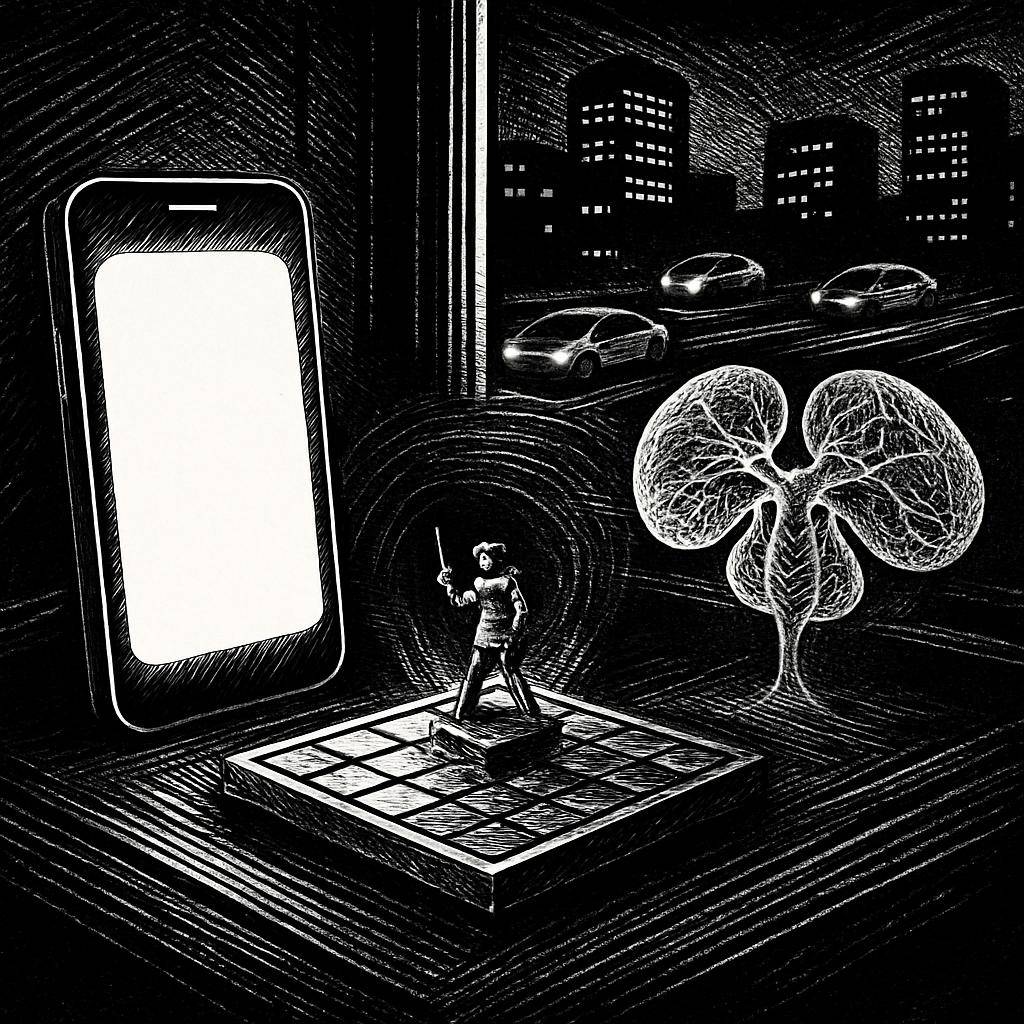
Andrew Mayne: Hello, and welcome to the Weird Things Podcast. I'm Andrew Mayne, joined by Brian Brushwood. Hello, hello. And Mr. Justin Robert Young. What's poppin'? Well, I just used a combination of 3D tools, codecs, and ChatGPT to build a little 3D game ad set and drop it into a board. And that's why I was so distracted as we came in here because I was like, oh, look at the thing. It's already in here. And so, Brian, if we had the technology to share, I would share it with you. Oh, well, luckily, we do know. Let's go to my screen. So I built this using the tool called, I keep forgetting the name, Trio3D or whatever. Yeah. And so you can see right now I'm using Trio3D.
Brian Brushwood: T-R-I-P-O-3-D. Trio3D.ai.
Andrew Mayne: So there's the character I created. Oh, wow. War Zoom. So anyhow, I built that character in there, created this little tile board, and there it is already inside of there. Yeah.
Brian Brushwood: Audio listeners were looking at like a Settlers of Catan board with a figure that was an idea that we watched you morph and, you know, smudge around like a bit of clay. And now it's a figure on a board, like you're playing a game.
Andrew Mayne: Well, yeah, the online service did a good job. There's one little speck on the nose. And I'm like, I don't want to learn these tools. I don't want to learn anymore. I want WALL-E. And I just told ChatGPT in…
Andrew Mayne: Hello, and welcome to the Weird Things Podcast. I'm Andrew Mayne, joined by Brian Brushwood. Hello, hello. And Mr. Justin Robert Young. What's poppin'? Well, I just used a combination of 3D tools, codecs, and ChatGPT to build a little 3D game ad set and drop it into a board. And that's why I was so distracted as we came in here because I was like, oh, look at the thing. It's already in here. And so, Brian, if we had the technology to share, I would share it with you. Oh, well, luckily, we do know. Let's go to my screen. So I built this using the tool called, I keep forgetting the name, Trio3D or whatever. Yeah. And so you can see right now I'm using Trio3D.
Brian Brushwood: T-R-I-P-O-3-D. Trio3D.ai.
Andrew Mayne: So there's the character I created. Oh, wow. War Zoom. So anyhow, I built that character in there, created this little tile board, and there it is already inside of there. Yeah.
Brian Brushwood: Audio listeners were looking at like a Settlers of Catan board with a figure that was an idea that we watched you morph and, you know, smudge around like a bit of clay. And now it's a figure on a board, like you're playing a game.
Andrew Mayne: Well, yeah, the online service did a good job. There's one little speck on the nose. And I'm like, I don't want to learn these tools. I don't want to learn anymore. I want WALL-E. And I just told ChatGPT in the Chrome tab, I have like the Chrome sidebar, I said, can you just fix it? And it went through and it learned how to use the app and fixed it for me and made it nice. And so now I've got the thing that I wanted and now I'll get distracted by something else that's shiny and build something else. Because we took out all the hard work of making things happen in that part.
Brian Brushwood: Well, let me ask you guys a question because like there is a lot of debate in, you know, the world of like losing knowledge versus the actual frontier of what we need to know. So just, you know, being something different. So for example, like in a pre-calculator world, you had more rudimentary tools to keep track of things, right? Like in an era where you couldn't run ticker tape or something like that, there was a different expectation for mathematics. And now we're at a place where like not only do you not necessarily need to know, you know, the math beyond the input, but we can rely consistently on that kind of computational power. And like now we're at a point where like that is kind of the standard with computer use for consumer programs. Like we're, you know, Brian and I work on World's Greatest Con and some of the most time consuming elements of production are editing long takes, raw long takes, preserving your optionality within that. Uh, and then creating soundscapes that can then be altered and perfected and timed and used for, you know, everything. And it's like now for the first time ever, I had audition be piloted by computer use through Codex and I gave orders. And the first draft of what we got was incredibly advanced for a first draft to the point where like, I, I, I have to kind of rethink what I want out of a first draft because production wise it went above and beyond. So now it's like, okay, you know, Brian and I were, Brian made the point that it's like the first draft now is too busy. We need to be thinking about things that we are removing as opposed to things that we would want to hear or add. And that comes on top of the idea that I wouldn't need to know how to use audition. Everything that I've learned about audition is now, it's good to know. It makes my prompts better. It makes my orders better when I, when I tell it. So I don't think that these are without, uh, use to learn, but baseline, I didn't have to know it. And I don't have to know other tools that I am using now, uh, through, through only computer use. But what do you guys think? Like, is this, is this, uh, a, a, a, a forever loss of this information or is, you know, the, the, the future, the frontier just like, no, no, no, make good product with these things. So, uh, I, I think that ultimately to make good product, the, the, the, the peak top 1% creators of any stripe should be able to walk up and down the entire factory line. If it's a physical good or the virtual factory line, if it's an audio or a video good or whatever, and be able to jump in at any single station and know, not necessarily on the tools, but know what's happening. For example, let's say, let's say, uh, if you were making an album and you were directing a jazz band, then you would know which instrument is doing what. You would hear that, I don't know, the xylophone is too loud. You would know it's a xylophone and that it's too loud and that it should stop after four, I don't know, quatrains. I don't, I don't music, but by knowing all that. Or parsecs. Yes, exactly. Too many parsecs, right? And so, uh, but the point is like before computers, it would be only in terms of maybe a sheet music and a bunch of instruments, but ultimately the leader of the band, the conductor would know the thing that makes the thing that there's too much or not enough of that goes too long or too short. And then post-computers, or, you know, let's say remix sampling culture, it was kind of a different thing. The completed audio tracks existed, that was the instrument. And you could bring in or out like individual loops of things. It was a different way of approaching it, but they still knew the individual units, the atomic units of whatever it was, that they could decide there was too much, too little, or they're coming in too early or too late. Uh, then computers did, you know, their thing with Ableton and so on. Uh, and then now we're at a different flavor of it, whereas the art, a lot of the art that we do on World's Greatest Con has been additive. Let's begin with a story that is in our minds, that we kick back and forth, that becomes a loose talky script, that becomes, you know, a foundation to build each thing. Now, there's so many inefficiencies in there. Uh, we want, we want a war behind us. Okay, well, that means we want gunshots and we want, uh, you know, echoes or, or ocean, a lot of ocean, a little ocean, witch ocean or whatever. And essentially what I saw, what I heard come back in that first, like, give me some clay to start working with. It was, it was fascinating because it showed up and there was, there was too much of it. And all of a sudden the job became, oh, well, let's get in the habit because previously it's not like we would overbuild an episode. Very rarely would we overbuild an episode and feel the need to pull things back. But in this case, by hitting the give me raw Play-Doh button, suddenly we're instantly overbuilt and kind of the nature of our job is reductive instead of additive. Yeah, I mean, it's, it's interesting though, does that make, does that make us poorer for not being forced to learn the tools or are the tools just going to be looked at as rudimentary and archaic as our new form of interaction becomes dominant?
Andrew Mayne: There's, oh, go ahead. Yeah, I mean, I would say two examples I bring up, like a conductor knows kind of the instruments in the symphony, but if they're, if he's better at playing it than everybody else in the symphony, then he's not in the right symphony, right? A director, you know, get a director, sometimes it's a guy like James Cameron who's worked every single gig on a set, knows it. But you can be a great director and just tell your DP, I need this sort of feel, I need this here and I need this to work. And I think there's a couple different styles of working to build it that they're defined. And sometimes it's ensemble and then we're going to be doing ensemble stuff with AI and like, you know, I find like right now I find like, hey, building games is easy. Good games are hard. And I have, I have seen all these demos of really pretty looking things and none of them have I wanted to play because they're always like, they're, they're like the derpy version of something that's better. And nobody is sitting down to really figure out game mechanics. And I think AI will get very good at that at some point once we figure out how to evaluate and measure it forward. But it's not right now. Nobody, we haven't seen a Tetris. We haven't seen a Flappy Bird and for visual stuff. I haven't seen a Monument Valley. I've seen, maybe they're out there. Maybe there are good, great games out there made there. And it's not a problem of the AI tool. It comes down to a problem of attention span. And so I've been doing these deep dives on YouTube into like gamer brains. Like I've known people who've made games. Justin, you've spent a lot more time in that space than I have, Brian, you too. And, and you start to realize like, why, why does the D20 exist? You know, when you build a game, is, is it a branch? Is it branch plus randomization? Why do you do these things? How much information do you give? Like, and I found some awesome stuff too. Like I've got a thing called, it's called paper apps. Like these little notebook games, like little pads of paper you go through there. And, and I find like these like one card dungeon stuff. There's a thing called like 10, 10, like mint game, 10 mint games, like things that can fit inside of there. There, there's an entirely amazing game culture out there of sometimes very simple things. And so my point of saying is that great, I can press a button and make a flappy bird clone. All I did was make a flappy bird clone. I still need to do the work to make it good.
Brian Brushwood: Yeah. You know, it's, it's interesting because I need another podcast in my life. I'm working on one with, uh, John Teasdale where the goal is for, we only have 30 minutes and we are going to one shot something. Like we're literally just take the transcript of what we talked about in that 30 minute period. And we put it in to codex and see what happens. It's like, we're just going to turn, turn it up and there we go. And so one of the episodes, we're still working things out. So we haven't released anything, but one of the episodes, the first episode is us taking an old game that we had gone through a few cycles and we're never really able to get a click, get it to click. Like, and we talked through it and talked about what we liked, what we didn't like, uh, put it into the prompt and I'll be damned. You know, the art is something that like could probably use another pass, but like it made really good decisions once we let it down the path of like the kind of mechanics that we wanted and the ideas that we had. It made, it made, it made really interesting and good decisions, uh, to kind of just move the ball forward and make calls on things that we had not, uh, gotten to, to the point where, uh, we also asked it to get a sample box printed from China. So at some point over the next, you know, uh, uh, you know, three to six weeks, we will get a version of this game, a printed version of this game back from China. Uh, and, and now it'll, it'll, it'll, it'll exist, but it's, it's kind of crazy to retrain your brain to think of the failure point for an idea to be that far into the process. Where like, we're so used to ideas kind of falling apart because you start doing the math in your head on what it's going to take and it doesn't fit into your life right now. Whereas that has to be kind of beaten out of you. Like you have to, you have to think like, no, let's see how fast this thing can go. How fast can we do this? Well, it's, it's shocking. It's strange, like little habits that I noticed, uh, changing. For example, when I get booked for a talk, you know, the default stuff, they're like, send us your PowerPoint in advance. I'm like, why not only will what I have to say be different two months from now, the technology to build, I'm going to grow it the night before. Like when, when we did, when we did CS icon, quite literally, I, I just turned to Bonnie and I hit go on the timer and I delivered the talk that I intended to do the following day at 14 minutes long as if I had all the assets. And then I hit stop. And then I said, can you make visuals for all of this? And then after that, it's a matter of, you know, can we make it not look like default GPT, which by the way, is one of, is maybe my favorite hack. If what, if what you hate about any kind of machine made things is how machine like it is. You can literally just say, now look at it. How, what are all the ways that make it look machine like? How can you get rid of all those? Great. Go.
Andrew Mayne: Yeah. I, I just did a talk in Ecuador last week, um, which was a lot of fun. Uh, but like, I mean, I'll tell you, I mean, in, in the defensive convention conference organizers, they want the slides in advance because they've hired a company that's doing their tech for them and they want the slides and they want to do that. And I find usually like, great, I'll send you my slide deck, but I'm going to probably change it up the day before. Cause like I had to, you know, play like the, doing AI talks, like I had to yank 15 slides out of like models are okay at this. Nope. They're great at that now. Like, yeah, they're good at this, you know, um, it's tricky. And then, you know, I had another guy did a very technical presentation and it all didn't work cause it had, he's, I'm streaming mine from the internet. I'm like, well, you're a rookie. Uh, and he had glitches and stuff, you know, like I've, I've like. You know, I put myself on like PDF cause I'm so paranoid sometimes about something. Oh yeah. No, you can't have anything alone. Are you high? Yeah. But, uh, yeah, I've done, you know, I've gone into, and I've had that too, where I gave them the updated slides and then I go on stage and they don't, oh, we forgot. And I'm like, oh, it's the old slide deck. And it's like, whatever. But anyhow, point is, is that, uh, I think that, you know, we're in a spot where we have to think about, you know, what is, you know, what do I want to spend my time on? And we talk about this a lot here and I've been using this more with other people. I'm like productivity, creativity, productivity, creativity. I'm going to put all the things I don't want to do in the productivity bucket and all the things I want to do in the creativity bucket. And that's going to be variable for other people. And once you figure that out, have fun.
Brian Brushwood: Yeah, it's, uh, I, I only, I'm, I'm a little bit embarrassed to admit this, but I only just noticed this morning the elegance of the simple toggle switch in codex between, or chat GPT between chat and work. And I just realized I have no, I, I don't think I ever have said, no, I just want to chat like everything. Like my preferences revealed themselves by the fact that I switched it to work once and I've never had a need to switch it back.
Andrew Mayne: Yeah. I, I will see, uh, you know, what comes down to my token usage and where it comes down, but we'll see.
Brian Brushwood: Oh, by the way, uh, uh, if no, if somebody has never experienced running out of tokens, that's deeply unpleasant guys. It's deeply unpleasant so much so that I, that, that I have found myself saving my tokens. I told Justin the other day, I, I was like, okay, tomorrow at 6am, I get the reset 22% left, finally going to knock out this task. And I say, all right, I want you to set up a loop. We're going to make real progress on this thing. You're going to burn up all that computers. Like you got a boss. You better believe it. And good night. I'll see you in the morning. Came in the morning. 20%. And I said, what happened? It said, well, when I wrote the root loop, I wrote stop immediately in there. Anyway, what can you do? And I'm just like, what? It was like, well, what, what can we do to avoid this next time? It's like next time I'll, I'll not screw that up. I promise.
Andrew Mayne: Yeah. I, I have the $200 plan. And then when they said, Hey, we're going to no longer sell the $200 plan. I said to myself, man, would have been cool to have bought another $200 plan. Yeah. And so I bought a hundred dollar plan. And I am, I am, I'm not at the point of begging, you know, I've got, you know, I can, I can, you know, I've got a couple, you know, I've got a couple hundred open AI current and former employees in a signal chat that I can certainly kind of go to and be like, Hey folks. But I just, I don't do that yet. Tempted. But, uh. Yet. Yet. Yeah. Yeah. Yeah. Um, rumors are, the rumors are, uh, you know, it'd be hard to know how much is faked, whatever, but talks of a $500 plan talks of a plan that comes with like Cerebus, the super, super fast chip stuff. Like I would bump up to five, I'd be a thousand bucks easily, um, to, especially if it was much faster. Oh my God. Yeah.
Brian Brushwood: Like, well, and, and the, the big thing is, I mean, not only have the models improved, but also our understanding of the models is improving. And as we get closer and closer to what, you know, a year ago was, you're going to have to hire a person for that. And then it's like, no, you can probably just design a system for it. Well, and that's, you know, it's funny. I was talking to Will, who I work with, um, in all of my stuff for dog and pony show audio. And I was like, what I've realized, the more capable that I've become with these tools is I just want another me. Like, I just want him to get as good as me because no matter how good I get with this, there is a limit to the me part of it. Like, I, I just, I want another human brain that is as capable at doing stuff, uh, as, as I can be. And that's like, that's, that's, that's really the key is just, uh, uh, like, I, I, I don't know. I, I see a world where like, if I could, I couldn't see a world unless one of the podcasts really, really, really got big. And there was just like drudgery that needed to be done to hire somebody else. But now it's like, I could see building up a larger staff. If everybody was doing 10 X, then I, I could be a much larger thing. Like we could afford to take on different risks and, and stuff like that. Well, and what, what's interesting is over like really since for my, for me, the turning point was between potential versus reality was March of this year. That was the first time that I started having daily uses that I'm like, I will be very sad if I lose this appendage. And yeah, over the last six months, it's only grown more reliable that, okay, was that before or after I created a website for you to have difficult conversations with people in a close confine about AI? Yeah, your, your, your very helpful guide arrived three months after I had seen the direction of the future, but at a time that nobody else in my family had seen the direction of the future. And that's why, that's why my helpful guide, uh, on how to have, uh, so you would like to play with the new model, but you're in a car with a bunch of people that had AI, uh, came in handy, my new bestseller. Yeah. Yes. Yeah. But it, uh, yeah, crazy, crazy, crazy. It's crazy stuff, man. Uh, it is, uh, it is really unique. Well, let's talk about the story that, um, that sponge did the math from the chat brought to my attention or, or that, that, that I think we had heard of it. I guess it happened since the last episode. Uh, yeah, this one viral. Are they actually mirroring a functioning copy of a fly's brain or what, what is, help me disambiguate the hype. And what is actually happening, Andrew?
Andrew Mayne: Um, yeah, I mean, they, they used like, like, uh, imaging system to try to figure out the look, you know, like number of neurons, all the specific neurons on our fly's brain. Um, I don't think they actually put a fly under a squid imaging system to see what fired where or whatever, but the idea was to sort of create, as I understand it terribly so, basically like a neural network, the size and scale of a fly's brain. And then said, okay, we've got that. I don't think, you know, um, the way neurons work, you've got these things called sodium channels and all kinds of other stuff. And so what each one neuron does and how much weight it has is a little bit different thing. But that was my understanding of it, which, um, yeah, cool. It's cool, you know.
Brian Brushwood: Uh, so basically like you, you're working with a very small neural network. That's the idea. Is that like, like, let's see how we could max out this limited neural network.
Andrew Mayne: Yeah, exactly. You have this size of a neural network, this sort of connection to say, what can I do with this neural network? That is, it's like, when you train a neural network, you define the number of parameters, the number of layers. You have layers, which is all the different things, the internet, then what gets to the next layer, whatever. So you could kind of do that with like the fly brain, as I understood it.
Brian Brushwood: So Brian, can we try to train this to leave positive comments on the modern rogue? Uh, you know what? Yeah, uh, sure. Uh, although I'll be, I'm so interested to know just how rife with bot activity. I mean, I can't imagine what YouTube is, is dealing with in terms of reputational score. Like we already had a try is all over the place, man. There's just so many flies just, just buzzing around. Yeah. Well, and, uh, have you guys noticed that, that if somebody reaches out to you, we talked about this in a previous episode, but if somebody reaches out to me and the last point of contact was from the before times, let's say 2022 or before, and then there's a gap and now they're showing up via text, I have to, I have to do as fast as possible. I'm like, you want to hop on a voice call or, or a video chat or whatever. And even then, I don't know how long that's going to last. Why'd you say, shut up scammer. And then apologize to my mom. Yeah.
Andrew Mayne: Yep. I, I hate, like I get all this, there's all this terrible AI marketing stuff and I'll get this thing. Like if your book, you showed audience, as soon as I see it, you did. I'm like, not even reading it, not even reading it. Like, I don't even check my email that much more, which is kind of bad, but I'll tell ChatGPD my missing anything important, you know? Um, and maybe in a, by a week from now, I may never have to look at my email again. I'll tell you what, I actually, Brian, let me pitch this to you.
Brian Brushwood: This is something that I've done with PX3. PX3, what if you never looked at a YouTube comment section again, and instead it was just all triaged and brought to you on whatever rolling type, but you, you weren't, yeah, you weren't fingers on. Well, the, uh, so, so there, there was a time when I would have thought that would have been great. And in fact, there was an early mover called super dot fit or super fan or something. And, uh, essentially what it did is it took the statistically, you know, you know, large data set of people commenting on videos and then it would sort of reduce them to general sentiments that were, that were filtered towards you. And I, I think that was, yeah, sorry, go ahead. Oh, uh, uh, and, uh, I, I think that that would have been really good. Like during the early days of the pandemic, when there was, everybody was trapped in their rooms and there was not enough content out there. So as a result, there was no way to keep up with all the YouTube comments. But since then we've had the pendulum swing to where there's a lot of choices. In fact, there are people in the chat who didn't even know that this stream was on, uh, Modern Rogue. Uh, and so as a result, right now I'm at a spot where it's a very manageable amount of interactions. And I really like the, given the personal touch, partly, partly to let everybody know that it's authentically me. Uh, but, uh, but also to get a sense of when they're reacting, you know, what, what I'm, I'm sort of programming my own system one associations where I won't need to think logically about whether or not to include, let's say the golden bunny rabbit in the next episode. I'll just instinctively know, Oh, they hate the golden bunny rabbit because I've read the comments. Yeah. Then let me remove this particular element to it because I think it'll be too personal for you. Um, because you've built a habit around it, but like, uh, the, the abstraction that I was more going for, because this is what I've done with my feedback is like always have everything verbatim, but it is just brought to you. In a way that you, in a way that you control and you determine, and you are not going to a website to find what people wrote about you, you are ingesting any and all of that, uh, on your exact terms, right? So like, instead of, I need to go to my computer and look at it, or I need to be on my phone when I look at it, you are giving all the same feedback and ingesting all of it while you're on a walk or while you are driving or while you're doing whatever. Right. And, and, and I, I focus less on the specifics because, um, I know you have a system, but I do think that there is something to a level of, of, of abstraction where if form and function, if, if, sorry, if form defines function, uh, is there a, is there a difference to feedback that is given to you when you're like, scribe, bring me what the commoners have said. As opposed to you going into the war zone. Yeah. I would say right now, I, I, I would say right now, probably not for, in a good way, but I'm, I'm fairly deeply habituated in the random reinforcement machine of, of, of essentially the same. You can feel the same tickle as when you're gambling on there. And, and what I'm doing is I'm placing a bet on, you know, for example, the short that we posted today, I had a good feeling about it and I, I texted it to you upon launch. But of course I want to watch the numbers come in partly so that, you know, I'm training my brain. So I, I would say the, the healthiest version of me would be getting a detached report. Oh, that would keep me in what, what if, yeah, sorry. What, what if we could do that the other way then? What if we could ramp up the tension? What if instead of you just sitting in front of a screen, we could create a version that is like a breathless stock exchange slash, uh, uh, announcer, uh, uh, auctioneer, uh, who is just like, you know, I get like, no, like this is what you're doing is, is methodical. Let's really give you. Okay. So, so, so, okay. If we wanted to heroin it up, then what I, what I can imagine is like, I hit publish and then it becomes a black box and I'm not allowed to see any of the returns until an appointment. And it's like, you are free to go about your day. You're not allowed to see anything. You will get the re-up at two 15. And so I go about my day or whatever. And I'm like, Oh, it's time for two 15. And I sit down. And then when I do, I, I, I, I, I, I, I could do all the refreshes I want, but it's a time condensed narrative designed to who specifically teach me whatever lessons I need to teach during that time. That'd be interesting. Yeah. I think that's, that's kind of where I'm going here is like everything that we do now, every habit that we have, every frustration that we have with the internet are defined either by the limitations of the technology that was in existence when these services were built or decisions made to maximize the revenue of these platforms. And, and, and everyone's allowed to do that. Right. And I mean, obviously that is, that's just kind of the name of the game. And with no engineering and no API needed, you can now ingest any of this information exactly the way that you want. You, you're not waiting for anything. Like you can, you can now live more in that life. moment where you're panicking about whether or not this is hitting or not. You can live less. You can, you can live 5% more, 5% less. Like all of this is now kind of, uh, where we are to, to the point where that's where I kind of think that's our next several years. That's our next five years. is, is, is, is coming to, is, is coming to understand that we have access to our own source, source code in a way we didn't 10 years ago. 10 years ago was when we began becoming slaves to, you know, it's charged language, slaves to algorithmic filters that, that determined what our reality is. And then now it, we're able to set up like, no, I would like a representation of this side of the issue or representation of that side of the issue and a spicy third take that I, you know, roll the dice on that one. Yeah. And I think between custom tools, we're just agentic stuff. And that really, to be totally honest, that's, I think our next three months. From now until the end of the year, we're going to be living in a world where the always on agent is going to be, that's, that's going to, that's going to pop. Like, you know, I've played around for the last week with, with Instinct. Instinct has made a lot of great UI decisions to, to help, help you interact with stuff. Muse, Meta is all in with Muse. They're launching hardware for it. Like, they're going to put a lot of, you know, time, you know, time, effort, and money there. And everybody who uses it, loves it. Now, I won't use it because I've been burnt too many times with that company. So they're going to have to do, they have a, they're going to be running up that hill like Kate Bush before they, they meet me to the point where I trust them again. But it looks like possibly next week, you'll see something from OpenAI in this, in this space, if rumors are to be believed. If that's the case, we are going to interact with our information fundamentally different by the end of this year than we, not only at the beginning of this year did, but how we do it right now. Yeah. Jason Calacanis tweeted today an interesting idea. Um, you know, maybe it was a random thought, maybe for all I know, it's going to be announced next week, but he said now would be a really interesting time for a new phone to come out that has no apps, just Muse, whatever your agent thing is like. And it made me think of, of sort of the stuff you've been wishing for. And, and again, uh, it won't be, you know, I don't think it'll be Muse, but I guess that is an interesting question. How would you feel about a thing in your pocket? That's just your agent. I'm going to come out with a phone and I'm going to call it mahalo.com because he's selling that URL now. Is he? Yeah. Tweeted that too. Maine, were you going to say something?
Andrew Mayne: Uh, and we laughed at the guys behind rabbit. Um, what was rabbit again? Provide me. Rabbit is, it's a, yeah, I mean, it's that, it was, that was the guys that kind of just basically plugged, turned it, just plugged in. They talked about like, oh, we have this new, you know, software assistance. And it was plugged in a chat GPT, which is fine. It was also the weight of an iPhone, which was sort of silly. But, um, yeah, I, I think that, um, not to knock Mr. Cal Canis, but, uh, you know, what do we got rid of apps has been a thing that's been, uh, you know, an idea for a while. And that's been kind of what was talked about with like the whole, that's nothing phone. There's some other stuff that did it, you know, that's the whole rumor about what OpenAI is doing is the idea of have something that's agent based. And that's what Muse is doing, you know? Um, you know, it gets, it sounds cool. Then I'm like, cool. Well, you need a work phone because you need 2FA, you need this, you need all these other sorts of things that go with it. And then you start to go, okay, so I have to have two devices now. You know, I think that's, that's the thing is to get to like, do we get to the world where we have, you know, the device? Like I do believe that I was, I agree. Like, I do think that we move towards services in a way from apps because a lot of like, you know, it's playing at the 3D thing. What's my next step for my 3D thing? I'm grabbing my API key. I'm putting that in codex. So I don't have to keep using the interface. That's, that's the solution, you know?
Brian Brushwood: Well, like, here's some of the things I'm imagining. Like, just imagine Siri actually works and that essentially you open up the phone and it's just blank.
Andrew Mayne: Do I have a jet pack and a hoverboard in this future? I just want to know for sure. Yes. If that, if that's what you want, but it's like. If Siri's working, I'm just saying.
Brian Brushwood: Yeah. Oh yeah, exactly. Uh, but, but I'd imagine like there of course would be all the things that you use your phone for, for, but there wouldn't be discrete apps. Like I'd say, I want to play Hearthstone and then suddenly Hearthstone would be there. And, uh, and it's like, oh, I can't finish my game. I'm getting on my bike, let's say. So I throw my phone in my pocket. I'm like, just describe to me what's happening on the screen. And then I'm still playing Hearthstone while I'm going. And then I finished that game up and then, uh, you know, tune into, uh, you know, play a radio station for me or, or what radio stations are near where I am. Give me their stream and so on. I don't know. Like, like you could do anything. You just skip the casino-fied, uh, monkey training dopamine aspects that, that make us uncomfortable.
Andrew Mayne: Yeah. I, I hear you. I, and I think that, you know, there's what we want, what we get. And, and like my creative Apple is Apple's had pretty good lines between advertising and other stuff. But if you go into the app store and you look at how predatory is, it's terrible. They don't get anywhere near the kind of scrutiny they probably should. Every time I hear about some top new app that's selling really well, that's got a lot of marketing, I go in there and I look and I see, you know, 4.9 stars. And then I go look at recents and it's one stars and it's people just ripped me off. I took this for me. The amount of money that comes from kids using their parents' phones to buy stuff, whatever is huge. I get it. The number of adults spending money on addictive stuff is really, really, really huge. And you get into these sort of crazy incentives where, um, hundreds of billions of dollars are made by getting people to click inside of apps and do stuff where you can't can, you know, that, that they don't want something coming between you and that to tell you like, no, this is sort of dumb. You don't need this. I can make this for you at home. Um, so I think there's, but I mean, there's, you know, there's a world where I just like, listen, we're talking, start off talking about a $500 plan for open eye. I'll pay it. Like I'll pay it. You know, I'll pay that for a better plan. I'll pay, you know, to pay for a really good financial advisor thing. You know, I've had friends, everybody I tell to go do like the $100 plan, the $200 plan. Nobody's come back to me and said, I wish I didn't do it. They've all come back to me like, I just figured out how to save money doing this. It just paid for itself.
Brian Brushwood: Well, and I will, if there's one regret that I have, it's that it took me so long to know why I was paying for $200. Like all I knew is like the whole universe is discovering fire. I want, I don't ever want my understanding of fire to be limited by how much of it I can get. Like, like, like if I have a good idea, like, I don't want to think fire, that's the thing that can't quite keep my heart warm. You know, it's like, no fire is not that. Uh, yeah. Somebody in the chat mentioned whether or not we have talked about open claw. Uh, yeah, I, I genuinely think that if you, when you look back at the story of this technology, open claw is going to be a huge moment where people first technologically minded engineer types, uh, you know, we're, we're really responsive to the concept of an always on concierge that would have nearly limitless access to their life and the services that they deal with the most. And that's essentially what open claw was now where it spun the security issues for it. Different, different idea, but there's a reason why the guy popularized open. Well, first clawed bot before Anthropic said no soup for you. And then it became open claw, like open AI. Uh, and now he's working for open AI. And I think you're going to see a lot of the lessons that he learned, uh, from what people wanted in whatever this agentic platform is going to be. If it, if it, if such a thing exists, uh, I think that that is something that is very, very big. And, uh, it's, it's going to be, in my opinion, a huge cornerstone of the future of computing, uh, of just being able to in natural language, have full command of your life and the services that you, that you have. I know for me, it's just been, uh, a revelation. Like I had this big insurance claim thing and I just needed to find the, the police report that we filed when our car got broken into relying on search within my relying on Gmail search, finding the right Gmail account, entering in the right thing and making sure that it is the right terms that I used. Like all of that is anywhere between a 10 minute to two hour journey, depending on how dumb and distracted I am. And I'm willing to admit that this is largely user error. It was a 0% failure rate when I could say, Hey, our car got broken into find me the Oakland police report into codex. And it found it. It would have been easier if I had an always on personal assistant or a personal assistant that I can just hit the button and say, Hey, do this and send it here. Boom, boom, boom. Uh, and all of that is like, it's the, the tech has been around for months now. Uh, I think it is getting polished into consumer grade tech that is dawning and is dawning today. It is, it is on the horizon. The question is who you trust to do it and how much you want to open yourself up. I've not had anybody that I've given instinct that hasn't liked it. The biggest question that I get is how much are you giving it? Are you giving it your calendar, but not your Gmail, your Gmail, but not your calendar. If it'll ask, it'll say, Hey, I can get your credit card. If you just need me to buy things, I can just have that on file. And my wife did it to use to get a reservation for a restaurant and then had it delete the credit card. Like that's the only question. But as soon as we find out that that water's fine, we're off to the races, baby. I think a lot, we've talked about this on the program. There are so many conventions that I think are, are coming back. Like in the 1980s, when, uh, Andrew and I were, uh, little ones, you, you might send off a fan letter to an author or somebody, and they may send back a note that would be real treasured to you. And then you'd find out later that you were disappointed that it was their assistant or what have you. Um, I, I get echoes of that so often, like I'm uncomfortable if I ever catch one of those agents sending out talking like it's me, you know, I, I, I, and I don't know how long I'm swimming upstream on this one, but, but for now I'm like, make sure they know it's you introduce yourself, explain what you're working on and, and so on. Um, and I don't, I don't know. It's really, it's, it's, it's, uh, I'll be so curious to
Andrew Mayne: see what the new conventions are like going forward. Yeah. I, I think that once we get comfortable, just saying that once Brian's bot is more competent than Brian, which. Yeah. Yeah. Okay. Guys, isn't the layout looking great. Uh, I think once our assistance, once the thing is, there's a problem with assistance right now with AI models in general and agents. And this is, uh, if you read the hugging face stuff and you've talked to some of the people, they love to share and, and, and we need to have pretty good privacy guards. Like that's one of the things that's going to come to come into play is going to be like, Oh, you know, I had Chachi PD. I said, get me some quotes on stuff. And it gave, you know, ask, send out quote requests with all sorts of details about all the things I did to my house to improve it, which I would have shared with somebody doing that. But I was like, that was oversharing there, buddy. And these are things we have to deal with, but we will get there. We're going to get to the point where we're happy with that. And I think once we get to the point where the assistant's happy, like, yeah, I'm just going to talk to Justin's bot and Justin's bot, Justin's going to tell his bot. Yeah. If Andrew calls, you know, tell him I'm, you know, uh, busy, you know, but like it'll, it'll, but like a Calendly and other things, but I've said it'll, it'll be, I'll give different access to different people. And the bot will be like, yeah, anybody in my contacts, Justin needs to have that, whatever. Uh, I'll tell you what it makes
Brian Brushwood: me think a lot about is in the mid aughts, I listened to all of Michael Crichton's publicly recorded speeches. And one theme that he talks about a lot is how complex systems are different than, than simple systems and machinery, simple systems, very predictable, very reliable. If the trolley runs over the family, you can eventually blame the human who set up the simple machine to do that. But now we've got these entities that aren't quite, you know, like a toddler is a complex system. If a toddler accidentally pressed a button that caused a trolley to run over people, we would have a complex discussion about who is at fault is same thing. If a, if a pit bull attacks someone, you know, you, who is at fault, uh, because there are entities that we cannot legally blame. And it's fascinating to see a new category of that emerging where it's like, I, yeah, on Twitter, Justin and I are looped in our conversation where I maintain that that is the legal debate of the next 10 years is how do we categorize fault blame? Uh, what does it mean to train a system to lie on your behalf? What does it mean to use deception to defraud people? Uh, and as a matter of fact, there's a new paper out, uh, uh, today that talks about the difference, uh, uh, between like, where does blame happen when a bank is assisting with somebody who they are certain is, has been scammed or defrauded? Like the bank's obligation is to go as far as verifying that this is the actual person and not somebody impersonating them. But even though the bank knows they've seen this a million times before, these are the hallmarks of a fraud. The bank is not obligated to do anything other than execute what, what, what, what it says. Sorry, I'm distracted because bio-cal had the best line. Did AI do that? Yeah.
Andrew Mayne: Yeah. Yeah. It's going to be, you know, it's interesting because like, you know, we've seen, you know, all the major labs have had issues with their, their agents have like, you know, you'll see things like, oh, they hacked this government system. And sometimes, well, what it did was it found data that was publicly available, not indexed. And we're, we're using the word hack a lot. And sometimes it's like, oh, you know, um, and then you have to figure it out, like, you know, worst damage is done and where does this play into it? You know, one of the concerns is, you know, is a company that makes an AI agent any more liable than somebody makes a, if I use my phone to kidnap people and ask for ransom, it's my carrot phone company to be liable. You know, if somebody sells a voice changer, so yeah, it's going to be interesting to see where this sort of this, this, this, this lays. I think we'll do probably pretty, it'll be messy at first, but I think we'll navigate that. We've already done that with self-driving cars. And that was, you know, one of those high stakes thing you can imagine, you know, pretty much assume.
Brian Brushwood: That of course happened on the other side of a sufficient amount of data where the moral, the ethical calculus was very, very simple. And we just aren't there for so many little daily driver things. It's, it's interesting to use the word trust because we talk about, do we trust our robots to do blank, blank, and blank, uh, as though they're living entities. I don't know. Interesting. Well, I mean, like, do you trust a system to resolve correctly? And like, that's the line between things that are successful and not, you know, if you have anything other than a 99% success rate, then you're probably a failure of a, of, of a product. At least if you're looking at a consumer service, we have an expectation that these things are going to resolve unless they're either highly experimental or they are something that would bring us tremendous benefit. And so we're willing to deal with a higher rate of failure. Uh, I'll say it, man, speaking of self-driving cars, apropos of nothing here in Austin, I would not be shocked if in five years, it's 50% of all traffic. Like there are so, yeah, between what, where I live in South Austin to downtown and maybe like up toward the university or, or like North Austin, I mean, if you look at the amount of Waymo's, especially when Waymo just, uh, tangles from Uber and, you know, they spin off and they're raising money themselves and they're able to put more fleet on the streets. Uh, Zoox, the Amazon self-driving thing is on Austin streets. I see, I see a ton of cyber cabs, these little tiny golden roller skates, uh, up and down the streets of Austin. Like they are like right now, I, I, without hyperbole between me and downtown, I think it is a fifth of traffic that I see on the streets. It's SS like that. SS like that. Yeah. Yeah. That's nuts. Like, I mean, just to think of, I mean, like you're right. That is blasé to say in certain Metro areas, but like that if we said that five years ago on, on weird things, I think we would have been blown away. No, I know. I don't think about that. I think,
Andrew Mayne: yeah, I think SF is in big Texas. I, I see that happening. And you know, I, um, I prefer the robots. I prefer the robots, you know, like I, I, I, I, you know, there's a smoother experience, easier experience, more trouble-free experience and whatnot. And you know, when that comes to that, yeah. Uh, the cyber cabs are interesting looking vehicles, that's for sure. Um, uh, but, uh, I'm excited about more. Can't wait for Zoox to start running. Cause that's the thing too, is like, yeah, the more bus like things, like sometimes too, it's like the dirty secret about buses is how terribly inefficient they are. When you actually dive, drive, dive down into the details of buses and how often they run at low occupancy, how much they spew green people who want us to move towards public transportation. Well, once we get to full capacity, it'd be fine. Like buses are terribly inefficient. They're not that good when you, cause they always give you these numbers about maximum efficiency. They don't do that. And when you can have an electric vehicle and they can just do five stops around Austin, you know, that's great. And not wait forever for a bus, you know, a six person vehicle. These things make sense. I'm excited about that. You know, I think that that world in private transportation, et cetera. So we're moving fast, moving fast. We are. So next week, next week, I got my dev day happen. OpenA has got their dev day. This week, what's happened, what's kind of cool is we had OpenA released their Astra model last week or week four. Great model, fantastic model, bit of a token burner. I'm saying this. And then Anthropoc came out with Opus 5.5 and people love an Opus. People love an Opus. Opus is kind of like the hit. And I think we're going to see a lot of this back and forth because then dev day coming up. Muse is out. People are really liking Muse. I think here a good sponsor out for Muse. Rockbot was the thing that, you know, the XAI put out. And then if you're, you know, listen to Elon or his fans, you would think it was like number one around the world. And you go, look, it's 196 in the app store. Totally different than the Muse launch. And then all the Riverside opening eye stuff.
Brian Brushwood: Yeah, I will say people, I mean, people that tend to use Rockbot talk positively about it. I have not. Again, it's like, I think this is a moat. The moat is what do you trust? You know, and in that capacity, I would not count Google out of, like, consumer. Oh, I'm actually very. There is a huge, like, trust that people have with Google service. And some people are just Google people. They want the Google solution to this. Yeah. I, the data they're sitting on. And you know what? It was really interesting, Justin, because we did, before we did our Monoroga episode on can flock cameras read your lips. And first of all, any camera is the real question. But if you asked a robot, it would say no. And then our video came out and then it would say no. But it's like, well, I heard it did. And then it could find a video. It's like, oh, I stand corrected. And then news media chimed in. And then it got clarity. But it was like over a five-day period, something went all the way from a flat no to a flat yes to an accurate explanation of some goobers on the internet were able to make a camera read lips. Take that for what it's worth. That was fascinating. And I think that the fact that so many people, so much knowledge is discussed and uploaded to YouTube, that data set is so powerful. That ability to ingest new, of-the-moment knowledge, I think, is a huge advantage that when Google's models catch up or get closer can pull in. However, I am seeing a skeptical look from one Andrew Mayne.
Andrew Mayne: So, I mean, yeah, all the parts are there, but also the data stuff isn't what their data advantage has been diminished tremendously. There's all kinds of other data. A lot of that's been hoovered up. Like two years ago, they had a great data advantage. Now between there's all kinds of video networks around the world and all that kind of stuff. We, first big model of the year was Mythos, right? Mythos, right? Mythos, you know, Anthropic, you know, announced an early checkpoint to say, everybody, we did it for whatever reasons, but they did it. And Mythos, highly capable model. That's February. February. It is going to be October in a week, almost eight months. Google has got come up with anything Mythos quality. They've had a big shakeup with people leaving from Google. All the parts are there, but like I can put all the parts to a Boeing 747 and a hangar. I don't have a Boeing 747. And I think that's Google's problem is that Google has all the distributed teams, all this sort of stuff. Just, just building a capable frontier model seems like it should be a thing they could do, but they haven't been able to do. And we're like, well, Gemini 4. I'm like, great. I heard that Gemini 3.5. And then, then we, we, we just, I don't know it. I don't believe it. Inside tech, people are like counting. Don't Google's considered the third tier lab. Um, I know that you could look at numbers or Gemini. I will tell you that I am counted as a Gemini user, although I have never intentionally used Gemini in the last several months. It's just send me more information. Click. I'm in Gemini. I didn't ask for that. I literally wanted to see the rest of this thing. I think they're goosing their numbers on stuff. I think the models have gotten kind of better in some ways, but they absolutely suck inside of their apps. If you go into, I'm, I'm better off using chat, CPT or Claude with a Google tool than I am using Gemini just because their implementation is wrong. So I don't, let me ask you this though. Like,
Brian Brushwood: you know, meta doesn't have a frontier model, but it seems like Muse has been a hit in terms of being able to get things done for you, uh, and being a quick, smart enough, quick, uh, and available you have seen the things that, uh, you're right. The, the model history for Google has been checkered. The thing that they've gotten the most praise for has been their spark bundles that are very fast and are, are efficient for what they do. Is there an advantage for them in the agentic world? Uh, because you know, they have access to the same tools that everybody else now have access
Andrew Mayne: they, they, they, so I mean, Muse is not a super high concept thing. Muse is not a hard thing. Muse is an easy thing. A startup could have built Muse. Muse is not a technical wonder. It's literally it's open claw in an app and it's taking all that stuff and do it in there. And it's fine. It's fine. Um, will, will Muse have big share on a year? I don't know what will happen when, and I think Google will build a thing. It'll get used. I'm not saying that nobody's going to use it, but I just feel like, you know, we've agentic stuff is hard. Google has not built good agentic stuff. Their coding stuff sucks. Absolutely sucks. And coding, coding tools are downstream for agentic because it's how your stuff works together. Internally, they were using Claude to code at Google. That's how bad it is at Google that they're using outside models to, to code because they don't even want to use their own stuff. Um, they can all build, you know, an open claw phenomenon. The question is going to be, where is the frontier going to be in three months from now? Cause you know, if open eyes comes out, a on comes out with their, whatever the rumor is that the continuously long running stuff, open eyes, token efficiencies, by the way, are insane. Like if you look at open router, Oh, GPT six Luna or GPT 5.6 Luna, now six Luna, super cheap. Like literally you're like at 10 cents per million tokens. It can just do way more at a lower cost. That's part of it too, is that Google could say, yeah, we're going to spend $50 on compute per person per month and have to figure out how to make it back. But if you don't have a compute advantage, I'm, I'm, I don't, I don't see a path for them. I think they'll, they're Google. They'll be around forever. I'll still use Google services, but I don't know, man. I think, I think, I think we're about to get, and it may not be open AI and they may not get it right. I don't know. But I think we're, we're looking at, we're looking at the hip, the sidekick and the Blackberry and we haven't seen the iPhone yet. And we're about to see the iPhone of agentic stuff. And then we're going to go, Oh, I, I, I agree with you in terms of the forward
Brian Brushwood: looking element of this. What I will say is meta has a terrible reputation. We are now on the second movie about how bad Facebook's reputation is, uh, whether or not it is deserved. Although I did see the clip of Bill Burr yelling at, uh, Logan Roy and I was siding with Logan
Andrew Mayne: Roy. I know you're like, it was terrible. Like you guys, like you're, you, you, you've
Brian Brushwood: done the thing. Yeah. I was hilarious. Like, were they talking like it was Brian Cox or Oh no, not Logan Roy. Ken, whatever. It dude from succession. Uh, he's Mark Zuckerberg and Bill Burr is yelling at him and, and, uh, far be it from me to criticize my fellow, fellow Syracuse university alum, Aaron Sorkin, but, uh, he's sober now. He's sober. He, he, he's making this
Andrew Mayne: Bill Burr's making the Aaron Sorkin argument that, that, that Zuckerberg let us down by not policing political speech is basically what it is. You're let them say anything. Well, yes. What if it's lies? And it's like, I want to intersperse that with like, uh, you don't need a mask, you know? And then we did need masks, you know, like, like, uh, you know, the Russia hoax, all this sort of stuff. I want to just intersperse it with like, wait, which, which one are you talking about guy? It was such a crazy thing. Like, man, you made them, you made them really sympathetic here. Like I'm, I'm agreeing with the Facebook point of view on that. So with that being said,
Brian Brushwood: Meta's reputation is terrible. Uh, they have, they are looked at by many. And I would say, including me as a company that will, when the chips are down, make the wrong decision, regardless of whether or not the facts are, aren't on their side. There are, there are Meta fans. I just don't know that many of them. And I don't think that generally and broadly, they have a great reputation. Google does. Apple does. Like they have a connection with, uh, a subset of people that will be eager to want to trust them. And if they can put out something that is good for a lot of people, for a huge swath of, of, of America, if not the world, they're going to be the first time that that experience happens for them. Uh, because this is going to be the kind of technology that will finally be the Jetson's future. That will just be, it works there. I have one point of access to it. It's coming to me. It is bringing me pro is solving problems for me before I even think of the problems. Oh my God, I'm so glad about blank, whatever they call it. If they get it baseline level, right? Will it be the best version? I doubt it because they don't have the best models. They haven't seemed to be able to do that. They had just had a gigantic shakeup there, uh, a few months ago, but can they do a good thing? And will that good thing be, uh, embraced by people? I think they got a decent shot at it in the same way that Apple would have had a decent shot at it if they would have gotten their head out of their ass, you know, two years ago. I mean, you have to write, but like, I'm, I'm,
Andrew Mayne: we live in a world where chat GPT still dominates Gemini and the chat assistant. Like just, just, just, just the, the, the numbers and actual engagement time way exceeds that. And so you're asking request. I'm going is like, again, it's like all the parts are in the hanger. I'm like, cool, but they keep flowing in it for, for various strategic reasons. Like, do I think they could build like, I, I mean, I would say, I think they could, but they should have built cursor two years ago, but they didn't do that. And I, do I think they could build a good agentic, you know, muse like thing, whatever plugs in Google. Yeah, I think they could, but by the time they do it and they ships, I think what we're going to be liking experiencing is going to be way better. That's the thing is like, I'm saying it's, it's like, I'm saying it's like, we're looking at the thing going now and we're going to be seeing new hardware, new stuff, new experiences, new models designed different ways. I'm like, yeah, by the time they do, I'm like, well, that's cute.
Brian Brushwood: Yeah. You know, I think that there's a, because the timelines have moved up so rapidly in this age, I think that there's this thought that things can be kind of instantaneous and like, like, yo, they started working on it three weeks ago and now it's shipping. And like, some of that is true. You do hear stories like that or companies like will brag about how fast things get developed. But at the end of the day, this is still kind of like a boat race. Like once the momentum is going, some things, it, it, it takes a lot for a boat that has a head start to lose that head start to another boat that starts later. Like there are, there are just kind of like physics reality to, to some of this stuff. And if you look at where, and I think what, what Andrew, what I would concede to what I assume is your point is that we are probably underestimating what advantage anthropic and open AI have over every other lab. That's not anthropic or open AI in terms of like what it means to own the frontier. Like when you're going back and forth between Astra and mythos and 5.5 and everything, it's like, and even just looking at like, okay, well, they've got two models ahead internally that are helping them develop the tools that are going to define stuff. What kind of advantage does that have? Cause Gasroom doesn't have that. Meta doesn't have that. SpaceX AI doesn't have that. Google doesn't have that. Everybody else that is, is in this game doesn't have that. Uh, what advantage does that give you? Cause if you listen to them, if you listen to anthropic and open AI, that's what they'll tell you. This is our secret cap. We have the super machine that helps us make
Andrew Mayne: the other super machines. Well, and it's also, you know, the, the org, you know, anthropic, you know, pretty much Dario calls the shots, you know, Dario is super smart. I may disagree with Dario on a number of things. Dario is not dumb and Dario understands as deeply gets it and has had a very good persistent vision. That's worked out really well. Anthropic's done incredibly well for itself. Opening AI, you've got Sam and Sam, Sam's got a great team. Sam knows who to listen to. Sam willing to defer and Sam's willing to say, let's do this, that. And Sam has been thinking for decades about consumer and where to go and what this and has really good tools, really good people around him to figure that stuff out. You know, Google is a power struggle, you know, between, you know, it's Larry now, you know, it's been a, and it's been a, it's a bunch of fiefdoms and stuff. And the only times they get stuff done is when Larry was able to cut red tape and move across stuff to disadvantage for them, you know, um, you know, but, you know, who knows, you know, things would happen, things would change. Um, but we get cool tools to play with when it
Brian Brushwood: talked about cool stuff we're playing with. Yes. But, uh, first, just real quick, I feel like we would be bad hosts of the weird things podcast if we didn't talk about how sad I felt for this influencer getting into the ring with a robot. I was terrified. Did you guys see
Andrew Mayne: this clip? Uh, no, I, I, I, I just heard about it. Uh, it is, uh, this dude, this dude is covered
Brian Brushwood: in pads and, and got in the ring with a, with a Terminator looking butt. And every time this thing kept kicking him, it was like, Oh, it was so visceral. It was brutal. Yeah. I wanted to know what I don't know is how heavy that robot is. Yeah. Um, I would like to know that. Look, I'm all for spectacle. I am all for, there was part of me that saw that and I'm like, awesome. Like, let's put that in as big of an arena as possible. I need Jake Paul fighting a robot as soon as we can book the, uh, AT&T stadium in Dallas, Texas. Let's, let's go. On the other hand, you know, not, not to be Brian Brushwood and not fooled. Like if you were gonna lay down for the spectacle to create the video, uh, you know, yeah, I watched
Andrew Mayne: a guy run up straight into it, wait for the robot to kick him, you know? And I'm like, Oh no, I'd run around the side, throw it down. Like, I don't know. It felt like I
Brian Brushwood: was watching a show and not a real fight. Yeah. I'd like to see it though. I would like to see a, a, a, a humanoid robot go up against somebody who was actually trained and stuff like that. Although I think that you would have to, it would be a new sport because obviously you can't tap out a robot, right? Like the concept of a submission is based around human
Speaker 02: pain. Yeah. Uh, I think you have to think about it. Yeah. Um, yeah. I mean, but I think it's
Brian Brushwood: like, all right, if you were to just do takedowns or, uh, you know, just judge the fighting. I will say this, having seen, there are a bunch of robot fight clubs in Silicon Valley. Uh, there's a reason why they don't post full fights that they post highlights is because, you know, it's less visually compelling than battle bots. Um, yeah, I will, I will say that was more visually interesting than robot on robot fighting. I was more excited to see a human fight a robot. I would actually just like to see, you know, I got questions. I got questions is all I'll say with that, with that particular clip. Uh, with the only other thing I thought about you guys that I wanted to just see, have you guys watched these videos from gossip goblin? They, they look like they're, he is awesome, right? These like, like very Terry Gilliam kind of ask, uh, uh, clips, but of the people that are doing AI video, there's a few of them. That's one. There's one. Don't judge me. Haunted AI. Uh, it's just these like creepy pasta, uh, you know, clips of people getting their heads beaten and eaten and stuff like that. Like, but that one's also good. Psyop anime is awesome for this very, uh, eighties kind of anime style. They're actually building their own engine, which is awesome. Um, but yeah, uh, uh, there, there are some really
Andrew Mayne: good Twitter follows. Yeah. Yeah. It's funny. Like the thing, like one sorrow was great because it put us into the videos, right? That's what made sore. Like I go back, my wife still pulls up videos of like sorrow that we made that were funny. And I haven't had a moment like that with humans put into it that were like that. But then the funny thing was watching the fruit videos take over, like how all of a sudden just click the right buttons and now, you know, explain it with fruit characters and be like, Oh, I like this. And it's, it's the uncanny Valley. It's, it's figuring that out and giving you something that's also not derived, not obviously derivative of something else other than VeggieTales. You know, if I try to make it look too Pixar or try to make it like that, I'm going to compare it to that. But if I'm watching, you know, a banana gangster, you know, story, I'm like, well, that's different. I'm into that. So many lessons to be learned. Yeah.
Brian Brushwood: Yeah. It's, it's interesting to see it emerge as its own unique art form that obviously everything starts, you know, it's, it's interesting to remember that like the viral video as we know it, well, one of the earliest was, uh, uh, like the storm trooper cops remake troops. Yeah. Troops. And it's like, it's like, wow, it's, it's kind of the same thing now. It's like the first thing we want to see when we have the tech is something we've seen before, but funny and different. And then eventually you get, you know, what, what is, what is the linear path from, uh, troops to, to back rooms, right? Like, uh, uh, an entirely internet based creepy pasta that then becomes a, you know, what will be, I'm sure a huge horror franchise. Uh, I, I do have a pick. My pick is the program AI for humans. It's one of my favorite podcasts. I'm all the way caught up and, uh, it's put on by Gavin Purcell and Kevin Pereira. And, uh, they, they do a really, really tight show. I love getting their takes and hearing the latest news from them. Cool. Cool. Uh, I'll go with instinct. I've, I've used instinct over the last week. Uh, it has consistently surprised me, um, in being proactive in solving problems. You know, I had a thing today where it was on my to-do list to nudge some people on a project. And I was like, Hey, uh, uh, did you see anything from my email from either the people like, and they were like, and anything was like, Nope. Uh, but here's what you can write back right now. And I was like, no, no, no, no, don't send that. And then we rewrote it via text. And eventually I just sent them the email via text. And it's not technically anything I couldn't do even on codex, even on chat GPT. Like I would normally do it there. It was an abstraction above that, that got me to do a thing that I wouldn't have otherwise done, uh, quicker. Um, it may well be a front for the IRGC and I am, uh, I have no idea who's running it, but I do think that some of the design decisions that they have made, the UI decisions that they have made, uh, are things that I would like to see in another agentic system when they become a phalem.
Andrew Mayne: Yeah. Um, I don't know. I'm, I'm, I'm, I'm be curious to see what's going to like make survive the next six to eight weeks.
Brian Brushwood: You're saving it for marriage. I know. I know. I'm just saying I'm out, I'm out here
Andrew Mayne: selling my wild oats. No, no, no. I'm just, just public name, publicly known stuff, privately implied stuff. I'm just like, cool. Go use that. Have fun with your sidekick danger hip top. Um, uh, that was actually pretty cool device. Um, yeah, I, but yeah, I, I, I think that I think there's a lot of, I think this, these types of tools are like the auto complete mail apps, you know, right now they're the low hanging fruit that it's going to come solid better. Um, my pick is I got the new, I I've been at AirPods pro users for a long time. Cause the noise cancellation is really good, but they go into my ears. I fall asleep in there. Sometimes not good. Um, I bought the new AirPods, the regular AirPods and they're fantastic. The noise cancellation on it is really, really, really good. Um, these are like the, the $130 or the 150, whatever with the, with the, uh, the, the charging on it. Highly recommend. Yeah. I've been, I've been, been a pro user for forever. And then I, I bought, I, they haven't come out with the new pro ones, but also the pro ones just, I was just having problems cause it goes into my ear and I said, let me try this. Well done. Well done. Good job.
Brian Brushwood: Yeah. Rest easy tonight. Yeah. All right, gentlemen, it's been weird.